A tempstar furnace blinking green light is the control board talking to you. It's flashing a stored fault code, and the number of flashes points to a specific problem. Most homeowners see the light and reach for the breaker.
That reflex hides the real fault instead of fixing it.
Here's the part people miss. Blink codes vary between Tempstar models, and the legend is printed on the blower door or the board itself. ANSI Z21.47 and CSA 2.3, the safety standards covering gas-fired central furnaces, treat those lockouts as required protective behavior.
So the light deserves respect before you touch anything.
Quick Answer
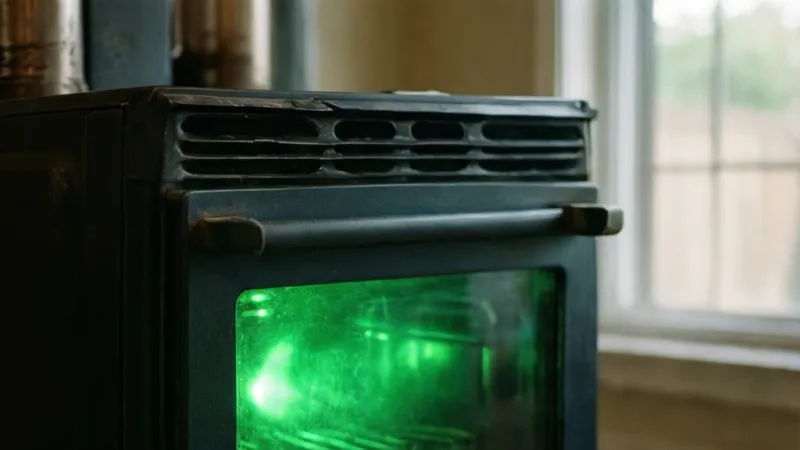
A blinking green light on a Tempstar furnace is a diagnostic fault code. The number of flashes identifies the problem. Common causes include ignition lockout, an open pressure switch, or a limit switch trip.
Count the flashes, then check your model's legend. Never bypass a safety switch.
Why a Blinking Green Light on a Tempstar Furnace Is a Safety Signal First
Your furnace is a gas appliance with a flame inside it. That single fact changes how you should read a blinking light. A code isn't a suggestion.
It's the board refusing to fire the burners because something in the safety chain didn't check out.
What the light can and can't tell you
The LED is a messenger, not a mechanic. It tells you which safety circuit opened or which step in the ignition sequence failed. It can't tell you why that happened.
A pressure switch code might mean a blocked flue. It might mean a cracked hose. It might mean a weak inducer motor that can't pull enough draft.
Same three flashes, three very different repairs.
That's the gap between reading a code and diagnosing a furnace.
| What the LED tells you | What the LED cannot tell you |
|---|---|
| Which safety circuit opened | Why it opened |
| How many ignition attempts failed | Whether the gas valve is weak |
| That the board locked out | Whether the heat exchanger is cracked |
| That a fault is stored in memory | Whether the fault is still active |
| Which model family you're dealing with | Which part to replace |
Why "just reset it" is the wrong reflex
Power cycling clears the code. It doesn't fix the fault. On most Tempstar boards, killing power for 30 seconds wipes the stored code and lets the furnace try again from scratch.
That sounds harmless. It usually isn't.
If the fault was a rollout switch or a high-limit trip, a reset lets the furnace fire again under the same bad conditions. A high-limit trip means the furnace got too hot. A rollout trip means flame pushed out of the burner box instead of up the flue.
Repeat those events enough times and you're stressing a heat exchanger that may already be compromised.
The carbon monoxide angle
A cracked heat exchanger is the failure mode that kills people. It lets combustion gases mix with the air your blower pushes through the house. You won't smell it and you won't see it.
The CDC tracks carbon monoxide poisoning as a leading cause of unintentional poisoning deaths in the United States, with roughly 400 deaths and over 100,000 emergency department visits each year from non-fire exposure. Those numbers are why a blinking light earns a second look.
If anyone in the house has headaches, nausea, dizziness, or unusual sleepiness that eases when they leave the building, treat it as a CO event. Get everyone outside and call 911 from outside.
The three situations that mean stop right now
- You smell gas, or hear hissing near the furnace. Leave, then call your gas utility from outside.
- Your CO alarm is sounding. Same drill. Out first, questions later.
- You see soot, scorching, or a melted wire inside the burner compartment. Shut the furnace down at the switch and call a licensed technician.
Anything else on the code list is worth a careful look. Those three are not.
What the Green LED Does on a Tempstar (ICP) Furnace Control Board
Tempstar is a residential HVAC brand owned by International Comfort Products (ICP), which sits under Carrier Global. The furnace control board, often called the integrated furnace control or IFC, runs the whole ignition sequence. The green LED is its status output.
Status LED vs diagnostic flash codes
These are two jobs on one light. The steady state tells you the board has power and is behaving normally. The blinking state tells you the board has stored a fault.
Some Tempstar boards switch to amber or red for certain faults. Green is usually the default or "board alive" color. Don't assume green means good news.
On plenty of models, green is exactly what blinks out a lockout.
Where the legend lives on your unit
You've got three places to look, in this order:
- The back of the blower door, on a printed label or wiring diagram.
- The installation and service manual for your exact model number.
- The control board itself, where the code table is sometimes silk-screened.
If the door label is missing or sun-bleached, pull the manual. Tempstar publishes owner's manuals and installation instructions by model number, and the flash code table is in there.
Solid, blinking, heartbeat, and no-light states
Exact behavior varies by board revision. Here's the general pattern across Tempstar's residential lineup.
| LED state | What it usually means |
|---|---|
| Solid green | Board powered, no stored fault |
| Slow blink, repeated | Active or stored fault code, count the flashes |
| Heartbeat pulse | Board alive and waiting on a thermostat call |
| Rapid continuous blink | Communication or polarity issue on some boards |
| No light at all | No 24V power, blown fuse, open door switch, or failed board |
No light is its own diagnostic. Check the breaker, the furnace switch, the blower door switch, and the small 3-amp or 5-amp automotive fuse on the board before assuming the board is dead.
How to Read Tempstar Blink Codes Correctly
Count the flashes, then stop and write the number down. That's the whole skill. Everything after that is interpretation.
Count the flashes, watch the pause
Tempstar boards blink at roughly one flash per second. After the last flash in a code, the LED pauses for about two to three seconds. Then it repeats.
Watch for two full cycles before you commit to a number. A four-flash code and a five-flash code look identical if you look away for a second.
Single code vs repeating sequence
Some boards store one fault and repeat it forever. Others cycle through several stored codes in order. If you see two different counts alternating, you're looking at a history, not a single failure.
That matters for diagnosis. A furnace that tripped a limit switch three weeks ago and a rollout switch yesterday has two different stories to tell.
Writing it down before you call anyone
Have these five things ready before you dial:
- Model number and serial number from the rating plate
- Flash count, written down
- How many cycles you watched before counting
- Whether the thermostat was calling for heat
- What you changed recently (filter, thermostat, power outage)
A technician with those five answers walks in knowing where to start. That saves you diagnostic time, and diagnostic time is billed time.
Reading the code is only half the job
Per the manuals we reviewed across Tempstar's current 80% and 90%+ platforms, the flash count points to a circuit, not a component. Two flashes means the pressure switch circuit didn't behave. It doesn't mean the pressure switch is bad.
That distinction is where DIY repairs go wrong. People replace the switch, the furnace still trips, and now they've spent money on a part that was never the problem.
Tempstar Blink Code Chart: Common Flash Counts and What They Point To
Read this as a map, not a manual. Flash counts vary by model, board revision, and production year. Your door label or service manual always wins.
| Flashes | Typical meaning | Common causes | Urgency |
|---|---|---|---|
| 1 | Idle, or lockout on some boards | Depends entirely on model | Check your legend |
| 2 | Pressure switch stuck closed | Kinked hose, welded contacts, water in tubing | Moderate |
| 3 | Pressure switch stuck open | Blocked flue, weak inducer, blocked intake | Moderate to high |
| 4 | High-limit switch open | Dirty filter, blocked return, restricted ductwork | High |
| 5 | Flame sensed out of sequence | Stuck gas valve, failing control board | High, shut it down |
| 6 | Rollout switch open | Blocked flue, cracked heat exchanger, flame rollout | Emergency |
| 7 | Flame loss during run | Dirty flame sensor, weak gas supply, draft issue | Moderate |
| 8 | Ignition lockout | Failed igniter, no gas, flame sensor fault | Moderate |
| 9 | Low flame signal | Contaminated or failing flame sensor | Moderate |
| 10 | Blower motor fault | ECM motor failure, loose harness, bad module | Moderate |
| 11 | Inducer motor fault | Motor failure, wiring, pressure port blockage | Moderate |
| 12 | Gas valve or control fault | Valve coil, board output, wiring | High |
| 13 | Polarity, grounding, or board fault | Reversed line voltage, poor ground, board failure | High |
Ignition and flame-sensing codes
Codes 7, 8, and 9 all live in the ignition story. The board sends 24 volts to the igniter, opens the gas valve, then watches for flame through flame rectification. A microamp reading in the 4 to 6 µA range tells the board the flame is real.
Below that, the board shuts the gas valve. A dirty flame sensor is the most common culprit, and it's a 15-minute clean with fine steel wool. A weak gas supply or a failing valve can produce the same code, which is why a technician checks manifold pressure before replacing parts.
Pressure switch and inducer codes
Codes 2, 3, and 11 all point at the draft system. The inducer motor pulls combustion air and creates a vacuum the pressure switch reads. If the vacuum never builds, the switch never closes and the board locks out.
Cold weather makes this worse. Condensate can freeze in the trap or the vent, blocking flow. A high-efficiency condensing furnace in a cold climate with a sagging or undersized vent pipe is a classic three-flash machine.
Limit, rollout, and blower codes
Codes 4, 6, and 10 are about heat and airflow. The high-limit switch opens when the heat exchanger gets too hot, usually from restricted airflow. The rollout switch opens when flame escapes the burner box, which is far more serious.
A blower code on a variable-speed ECM motor usually means the motor module failed. On older PSC blowers, it usually means a capacitor or a relay on the board.
Control board, polarity, and grounding codes
Codes 12 and 13 are the ones technicians dislike. A polarity fault means line voltage is wired backwards. A grounding fault means the furnace chassis isn't properly bonded.
Both are installation problems, not wear problems. They also show up after amateur thermostat swaps and DIY electrical work. NFPA 54, the National Fuel Gas Code published by the National Fire Protection Association, covers gas piping and appliance installation requirements, and improper electrical bonding sits right alongside those concerns.
Model Matters: F9MVE, F9MXE, N9MSE, N8MSB, G9MVE and Friends
Two Tempstar furnaces can blink the same number of times and mean two different things. That's not a design flaw. It's what happens when a brand runs several control platforms across a decade of production.
Why the same blink count means different things across boards
Board revisions change. A code that meant "low flame signal" on a 2012 board might mean "blower fault" on a 2019 board. Tempstar has shipped multiple control platforms across the F, N, and G series, and the flash tables moved with them.
As of 2026, the flash-count convention still holds across the residential lineup. The mapping doesn't.
What the model characters usually signal
The letters and numbers in a Tempstar model name point to cabinet type, efficiency tier, staging, and blower design. The exact decoding shifts between generations, so treat this as a guide.
| Character | What it usually signals |
|---|---|
| F, N, G | Cabinet type or production series |
| 8 | 80% AFUE, non-condensing |
| 9 | 90%+ AFUE, condensing |
| M | Modulating or multi-stage gas valve |
| X | Two-stage variant |
| V | Variable-speed blower |
| E, B | Blower or revision suffix |
Finding your model and serial number fast
The rating plate is your ground truth. Look on the outer cabinet side, the front panel, or inside the blower compartment on the inner door.
Write down both numbers. The model number gets you the right manual. The serial number tells a technician the production year, which narrows down which control board revision you're running.
When to trust the manual over anything online
Always. Generic furnace advice is written for a category, not a unit. Tempstar's own documentation for your model is the only source that knows what four flashes means on your specific board.
If you can't find the manual, search your model number plus "service manual" to reach the manufacturer's literature. Don't substitute a forum post for it.
The one exception
If the manual says the fault is a rollout switch, a limit switch, or anything involving gas or flame, stop reading and call a licensed technician. No document, ours included, should talk you through repairing a combustion fault yourself.
The High-Stakes Faults: Lockout, Pressure Switch, Limit, and Rollout
Not every code carries the same weight. Some faults are annoying. Others are the furnace's last line of defense against a genuinely dangerous condition.
Knowing which bucket a code falls into changes how fast you need to act.
Ignition lockout after repeated tries
Ignition lockout means the board tried to light the burners and failed. Most Tempstar boards allow three or four attempts, then shut the gas valve and lock out for about an hour. The LED keeps blinking the lockout code through that whole window.
The cause is usually one of four things. A failed hot surface igniter, no gas at the burners, a dirty flame sensor, or a gas valve that won't open. An igniter that reads open on a multimeter is dead.
A good one typically shows resistance in the 40 to 90 ohm range, though the exact spec is model-specific.
If you have a gas range and the other burners work fine, your gas supply is probably okay. If the furnace is the only gas appliance that fails, suspect the igniter or the flame sensor first.
Open limit switch and overheating
A high-limit switch opening means the heat exchanger got hotter than its rated limit. The board cuts the burners to protect the metal. Most Tempstar furnaces target a temperature rise somewhere between 30 and 60 degrees Fahrenheit, and the limit trips well above that.
Nine times out of ten, this is an airflow problem. A filter loaded with pet hair, a return grille blocked by furniture, or a duct system sized too small for the blower. The switch did its job.
The ductwork didn't.
Manual reset limit switches exist on some models, and they're deliberately hard to reach. That's a safety feature, not an inconvenience. If a limit trips more than once, the airflow issue needs fixing before the switch gets reset again.
Rollout switch trips and what they imply
A rollout switch opening means flame escaped the burner box. That's combustion happening where it shouldn't. On some Tempstar models the switch is manual reset.
On others it's a one-shot device that must be replaced after it trips.
Flame rollout usually traces back to a blocked flue, a failed heat exchanger, or a burner that's badly out of adjustment. It can also happen when a strong exhaust fan in the house pulls flue gases backward, a condition called backdrafting.
Never reset a rollout switch and walk away. If it tripped once, the cause is still there. A technician needs to inspect the heat exchanger and verify draft before that furnace runs again.
Flame sensed out of sequence
This code is the one that makes technicians pause. The board detected flame when the gas valve should have been closed. That means gas is reaching the burner when it shouldn't, or the board is seeing a false signal.
A stuck gas valve is the dangerous version. A failing flame sensor or a board with a bad sensing circuit is the less dangerous version. Either way, the furnace should stay off until someone qualified diagnoses it.
If you smell gas at any point during this, get out of the house. Call your gas utility from outside. Don't flip switches on the way out.
How the four faults rank
| Fault | Typical trigger | Risk level | What to do |
|---|---|---|---|
| Ignition lockout | Failed igniter, no gas, dirty sensor | Moderate | Let it cool, check gas supply, call a tech |
| High-limit open | Restricted airflow, dirty filter | High | Replace filter, check returns, call a tech if it repeats |
| Rollout switch open | Blocked flue, cracked heat exchanger | Emergency | Shut it down, call a licensed technician |
| Flame out of sequence | Stuck gas valve, bad board | Emergency | Shut it down, call a licensed technician |
The Real Risks: Carbon Monoxide, Gas, and 120-Volt Shock
Three hazards sit inside a residential furnace. Combustion gases, unburned fuel, and line voltage. Each one has a different warning sign and a different response.
CO exposure signs and why detectors matter
Carbon monoxide is odorless, colorless, and slightly lighter than air. You can't sense it. That's the whole problem.
Early symptoms look like flu. Headache, nausea, dizziness, fatigue, confusion. The tell is that symptoms ease when you leave the building and return when you come back.
A UL 2034 listed CO alarm is the only reliable early warning. Put one on every level of the home and outside each sleeping area. Test it monthly and replace the sensor or the unit per the manufacturer's schedule.
A blinking furnace code plus a CO alarm is a confirmed event, not a false alarm. Get everyone outside and call 911.
Gas smell, hissing, or soot
Natural gas and propane both get an odorant added so you can smell a leak. If you catch that rotten-egg smell near the furnace, don't investigate. Don't flip light switches.
Don't use your phone inside.
Leave the building. Call your gas utility or 911 from outside. The utility will send someone out at no charge to find and stop the leak.
Soot is a different warning. Black residue around the burner area or on the front of the furnace means incomplete combustion. That usually points to a dirty burner, a blocked flue, or a heat exchanger that's failing.
Shut the furnace down and get it inspected.
Cracked heat exchanger and flame rollout
The heat exchanger is a metal shell that separates combustion gases from the air your blower pushes through the house. When it cracks, the two mix. That's how CO gets into living spaces.
You can't see a crack from the outside. A technician finds it with a combustion analyzer, a borescope, or a visual inspection of the internal cells. Visible flame rollout, a yellow or lazy burner flame, or a furnace that trips the rollout switch repeatedly all raise suspicion.
A heat exchanger replacement can run well past the cost of a new furnace. That's why heat exchanger condition drives so many repair-or-replace decisions.
Electrical hazards inside the blower compartment
The control board and blower run on 120 volts AC. That's enough to kill you. Capacitors in the blower circuit can hold a charge even after the power is off.
If you open the blower compartment, kill power at the furnace switch and the breaker. Confirm with a non-contact voltage tester before touching anything. If you don't own a tester, don't open the panel.
Low-voltage wiring on the thermostat side runs at 24 volts AC. That won't hurt you, but shorting it can fry a control board that costs several hundred dollars to replace.
A quick risk comparison
| Hazard | Warning sign | Immediate action |
|---|---|---|
| Carbon monoxide | Headaches, nausea, alarm sounding | Evacuate, call 911 |
| Gas leak | Rotten-egg smell, hissing | Evacuate, call utility from outside |
| Flame rollout | Soot, scorching, rollout code | Shut down, call a technician |
| Electrical shock | None until contact | Kill power, verify, use PPE |
Safe Steps You Can Take Before You Call a Technician
There's a real list of things a homeowner can check safely. None of them involve opening the burner compartment or bypassing a switch. All of them save you diagnostic time.
Thermostat call, breaker, and door switch checks
Start with the thermostat. Set it to heat and raise the setpoint five degrees above room temperature. If nothing happens, check that the thermostat has batteries and that the display is on.
Then check power. Look at the breaker panel for a tripped breaker. Look for a wall switch near the furnace, often labeled "furnace" or "emergency." That switch kills power to the unit and gets flipped by accident more often than you'd think.
The blower door switch is the third one. It's a safety interlock that cuts power when the door is removed. If the door isn't seated all the way, the furnace won't run and the LED may stay dark.
Filter and return air check
Pull the air filter and hold it up to a light. If you can't see through it, it's done. A clogged filter is the single most common cause of high-limit trips and short cycling.
Check the return grilles too. Furniture, rugs, and boxes pushed against a return can starve the furnace of air just as effectively as a dirty filter. Verify the filter is facing the right direction, since the arrow points toward the blower.
If you run a 1-inch filter, aim for MERV 8 to MERV 11. Higher MERV ratings capture more particles but restrict airflow more, and a 1-inch filter above MERV 11 can choke a residential system.
Condensate drain and vent obstruction check
This one only applies to 90%+ condensing furnaces. They produce acidic condensate that drains through a trap and out of the house. That trap can clog with debris, algae, or scale.
Find the condensate trap and the drain line. Look for standing water, slime, or a line that runs uphill. In cold climates, check the outdoor termination for ice blockage.
Then look at the flue. A condensing furnace vents through PVC pipe, and that pipe can sag, freeze, or get blocked by a bird nest. A blocked flue trips the pressure switch and produces a three-flash code.
The one reset you're allowed to try
There is exactly one reset a homeowner should attempt. Kill power to the furnace at the switch or breaker for 30 seconds. Restore power and watch what happens.
If the furnace fires and runs normally, you may have cleared a one-time event like a brief power interruption. Note the date and keep an eye on it.
If the same code returns within a few cycles, stop resetting. The fault is real and repeating. Further resets just stress the equipment and delay the repair.
What you'll need
| Tool | Why you need it |
|---|---|
| Flashlight | Read the LED and the door label |
| Non-contact voltage tester | Confirm power is off before touching anything |
| Screwdriver set | Remove the blower door and filter cover |
| Phone camera | Photograph the model plate and the LED |
| Notebook | Write down the flash count |
When a Blinking Green Light Is Not an Emergency and When It Absolutely Is
Timing matters. Some codes can wait until morning. Others mean the furnace stays off until a technician shows up.
Codes that can wait for a scheduled visit
A single ignition lockout after a brief power blip is usually a wait-and-see. Same with a blower code that clears on its own after a reset, or a low flame signal code that shows up once and never returns.
Two-flash pressure switch codes from a clogged condensate trap often clear once the trap is cleaned. If you clear it, the furnace runs normally, and the code doesn't come back, you've probably solved it.
Schedule a tune-up rather than an emergency call in those cases. You'll pay a normal service rate instead of an after-hours premium, which can run two to three times higher.
Codes that mean shut it down now
Shut the furnace down at the switch if any of these show up:
- Rollout switch code
- Flame sensed out of sequence
- Repeated high-limit trips
- Soot, scorching, or a burnt smell near the furnace
- A CO alarm sounding anywhere in the house
- Any gas odor at all
Don't reset and retry. Don't run the furnace "just to see." These conditions can produce CO, fire, or an explosion, and no amount of heat is worth that risk.
No-heat in freezing weather
A no-heat call in January hits differently than one in April. Pipes freeze, and a burst pipe costs far more than an emergency service call.
If the outdoor temperature is dropping below freezing, treat a no-heat situation as urgent regardless of which code you see. Open cabinet doors under sinks on exterior walls. Let a trickle of water run at the farthest faucet.
Call for service and be honest about the situation.
If you have a space heater, use it safely. Keep it three feet from anything combustible and never leave it running unattended overnight.
The decision flow in plain terms
If the code is a rollout, flame-out-of-sequence, or repeated limit trip, shut it down and call. If the code is a lockout or pressure switch fault and the house is warm enough, schedule a visit. If the house is getting cold, call now.
That's the whole decision.
Mistakes Homeowners Make With a Blinking Green Tempstar Light
Most furnace damage we see in repair records traces back to one of four homeowner mistakes. All four are avoidable.
Guessing at the code without the legend
Every Tempstar board has a code table somewhere. The blower door, the manual, or the board itself. Reading the light without the table is like reading a foreign menu by the pictures.
Generic online code charts often list a different mapping than your board uses. Cross-reference the flash count with your model's documentation before you assume anything.
Swapping parts instead of diagnosing
This is the expensive one. A homeowner sees a three-flash code, reads "pressure switch," and buys a pressure switch. The new switch goes in and the furnace still trips.
The pressure switch code means the switch didn't close when the board expected it to. That could be the switch, the hose, the inducer motor, the flue, or the condensate trap. Parts swapping replaces the cheapest suspect and ignores the actual cause.
Technicians diagnose with instruments. A manometer reads the vacuum at the switch port. A multimeter checks continuity.
A combustion analyzer measures flue gases. Those readings tell you which part is actually failing.
Bypassing safeties or jumping switches
Somebody on a forum will suggest jumping the pressure switch or taping the door switch closed. Never do either. Those switches exist because the alternative is carbon monoxide in your living room.
A jumped pressure switch lets the furnace fire without proving draft. A defeated door switch lets it run with the blower compartment open. Both scenarios can kill.
If a technician ever suggests bypassing a safety permanently, get a second opinion. Temporary diagnostic jumps happen. Permanent ones are a red flag.
Ignoring a repeat fault after a "successful" reset
The furnace fired up after the reset, so it's fine, right? Not necessarily. Intermittent faults are the hardest to catch and often the most serious.
A flame sensor that reads marginally low will work on a warm day and fail on a cold one. A heat exchanger with a hairline crack will pass a visual check and fail under full firing. A reset that "works" just means the fault hasn't recurred yet.
Log every code you see. Date, time, outdoor temperature, and what the furnace was doing. That log is gold for a technician trying to reproduce an intermittent failure.
What a Licensed HVAC Tech Actually Checks and Why It Costs What It Does
A diagnostic visit isn't guesswork. It's a sequence of measurements that narrow the fault down to a single component. Understanding that sequence tells you why the fee is what it is and why the repair estimate isn't just a parts price.
Combustion analysis and temperature rise
The first thing a good technician does is measure the flue gas. A combustion analyzer reads oxygen, carbon dioxide, carbon monoxide, and flue temperature at the vent. Those numbers tell you whether the furnace is burning cleanly or producing CO.
Then comes temperature rise. The tech measures return air temperature and supply air temperature with the furnace running in steady state. The difference is the rise, and it should land inside the range printed on the rating plate, usually 30 to 60 degrees Fahrenheit.
A rise above spec points to low airflow. A rise below spec points to excess airflow or a weak flame. Both narrow the diagnosis fast.
Static pressure, gas pressure, and microamp readings
Static pressure measures how hard the blower is working to move air through the ducts. A reading above 0.5 inches of water column on a residential system usually means the ductwork is undersized or the filter is too restrictive.
Gas pressure comes next. A manometer reads manifold pressure at the gas valve outlet. Natural gas typically runs 3.5 inches of water column, propane closer to 10.
Off-spec pressure explains weak flames, delayed ignition, and flame sensor faults.
Flame sensor output gets measured in microamps. A healthy signal usually sits between 4 and 6 µA. Anything below 1 µA and the board starts shutting the gas valve.
Diagnostic fee vs repair cost ranges
Pricing varies by region, season, and whether it's a weekday or an emergency call. Here's what our research across service records shows.
| Service | Typical cost range |
|---|---|
| Diagnostic fee (often credited toward repair) | $75 to $300 |
| Standard repair labor | $100 to $200 per hour |
| Common part replacement (igniter, flame sensor) | $150 to $400 installed |
| Pressure switch or inducer motor | $300 to $800 installed |
| Control board replacement | $500 to $1,200 installed |
| Heat exchanger replacement | $1,500 to $3,000 |
| After-hours or weekend emergency premium | 1.5x to 3x standard rate |
A diagnostic fee that's credited toward the repair is standard practice with most HVAC companies. Ask upfront whether they credit it.
NATE-certified vs general handyman
NATE certification is the industry's benchmark for technician competence. It requires passing exams on heating, cooling, and electrical fundamentals. It doesn't guarantee a great tech, but it filters out the ones who guess.
A general handyman can swap a thermostat or change a filter. That's the ceiling. Anything involving gas, combustion, or line voltage needs a licensed HVAC technician, and in most states it's a legal requirement.
Ask for the license number before you book. Verify it with your state's licensing board. It takes two minutes and protects you from uninsured work.
Why the measurement matters more than the part
Two homes can trip the same four-flash code for completely different reasons. One has a dirty filter. The other has a collapsed duct run hidden behind drywall.
The measurement finds the difference. Parts swapping doesn't.
That's the value you're paying for. Not the wrench time. The diagnosis.
Maintenance Habits That Stop Repeat Blink Codes
Most of the faults that produce a blinking LED are preventable. A handful of habits cut your odds dramatically. None of them require tools or technical skill.
Annual tune-up timing
Book your tune-up in early fall, before the first cold snap. That's when technicians are still available and before emergency season pricing kicks in.
A proper tune-up includes cleaning the burners, checking the flame sensor, verifying gas pressure, inspecting the heat exchanger, testing the igniter, and checking the condensate system on high-efficiency units. Ask what's included before you book.
Manufacturers typically require documented annual maintenance to keep the warranty valid. Skipping tune-ups can void a heat exchanger claim years later, which is the most expensive part in the furnace.
Filter MERV and replacement rhythm
Filter changes are the cheapest maintenance you'll ever do. They're also the most skipped.
| Filter type | Replacement interval |
|---|---|
| 1-inch fiberglass | Every 30 days |
| 1-inch pleated MERV 8 to 11 | Every 60 to 90 days |
| 4-inch media MERV 8 to 11 | Every 6 to 12 months |
| 5-inch media cabinet filter | Every 12 months |
Homes with pets, smokers, or ongoing construction need more frequent changes. Check the filter monthly during heavy-use season and replace it when it looks gray.
Don't jump to MERV 13 or higher on a 1-inch filter. The added restriction can trip the high-limit switch and short-cycle the furnace.
Condensate and vent care in cold climates
Condensing furnaces produce a gallon or more of acidic condensate per hour in cold weather. That water runs through a trap and out a drain line. Both can clog.
Clean the trap at the start of every heating season. Flush the drain line with warm water. Check that the outdoor termination is pitched properly and isn't buried in snow or mulch.
In freezing climates, verify the vent termination isn't icing over. A blocked vent is one of the most common causes of a three-flash pressure switch code in January and February.
Surge protection for the control board
The control board is the most electronics-heavy part of the furnace. It's also the most vulnerable to voltage spikes from lightning, brownouts, and utility switching.
A whole-home surge protector at the panel helps. A point-of-use surge strip on the furnace circuit helps more. Neither is expensive, and either can save a board that costs several hundred dollars to replace.
If you've had a recent power event and the furnace is blinking, that's a strong hint the board took a hit. Note it for the technician.
Repair, Replace, or Warranty Claim: Making the Call
A blinking light eventually forces a decision. Fix it, replace it, or file a claim. The right answer depends on the furnace's age, the cost of the repair, and what your warranty covers.
Parts warranty vs labor coverage
Tempstar's standard residential warranty typically covers parts for a set period and the heat exchanger for longer, sometimes for the life of the original owner. What it almost never covers is labor.
That gap matters. A covered control board might cost $0 for the part and $400 for the install. A covered heat exchanger might cost $0 for the part and $2,000 in labor because the furnace has to come apart.
Read your warranty document before you approve a repair. It tells you what's covered, what's excluded, and whether maintenance records are required for a claim.
Age, AFUE, and heat exchanger lifespan
A gas furnace usually lasts 15 to 20 years with proper maintenance. Once it passes 15, every repair becomes a bet against the next failure.
| Furnace age | Typical advice |
|---|---|
| 0 to 8 years | Repair. Warranty likely covers the part |
| 8 to 15 years | Repair if the cost is under 30% of a new unit |
| 15 to 20 years | Weigh repair against replacement carefully |
| 20+ years | Replacement usually wins on total cost |
AFUE matters too. An 80% furnace from 2005 wastes 20 cents of every heating dollar. A modern 96% condensing unit cuts that to 4 cents.
In cold climates, that difference pays back over a decade.
When a control board failure tips the scale
A control board replacement on an older furnace is often the tipping point. The board itself is expensive, and a new board can expose weak motors and valves that were running on borrowed time.
If the furnace is over 15 and needs a board, get a replacement quote before you approve the repair. Compare the two numbers side by side. Sometimes the math surprises you.
If the heat exchanger is cracked, replacement almost always wins. Repair costs are high, and the safety risk of running a compromised exchanger is unacceptable.
Documentation that protects your claim
Keep a folder, physical or digital, with the following:
- Original installation invoice and date
- Model and serial numbers
- Every maintenance receipt with the technician's license number
- Every repair invoice with part numbers
- Filter change log, even a handwritten one
Warranty administrators ask for this when you file a claim. Missing records are the most common reason claims get denied, even when the failure is legitimate.
FAQs About the Tempstar Furnace Blinking Green Light
Does a blinking green light always mean a fault?
No. On some Tempstar boards, a slow green blink is a normal status indicator during a heating cycle. The only way to know is to check your model's legend.
If the light is blinking faster than usual, or the pattern changed, a fault code is likely stored.
Can I clear the code myself?
Yes, you can clear the stored code by cutting power to the furnace for about 30 seconds. That wipes the board's memory and forces a fresh ignition attempt. It does not fix the underlying fault.
If the code returns within a few cycles, the problem is still there.
How long before it locks out again?
Most Tempstar boards lock out for roughly one hour after a failed ignition sequence. After that hour, the board retries automatically. If the fault is still present, it locks out again.
A furnace that locks out, waits, and locks out repeatedly has an unresolved issue.
Is it safe to run the furnace while it's blinking?
It depends on the code. A low flame signal or intermittent blower fault is usually safe short-term. A rollout switch code, flame-out-of-sequence code, or repeated high-limit trip is not.
Shut the furnace down and call a technician for those.
Why did the light start blinking after a power outage?
Power outages and surges can trip the board into a lockout even when nothing is mechanically wrong. Reset the furnace once. If it fires normally and the code doesn't return, it was likely a one-time event.
If the code comes back, the surge may have damaged the board.
Does a smart thermostat cause false codes?
Not usually, but improper wiring can. A smart thermostat that draws power from the furnace's 24-volt transformer without a proper C-wire can overload the circuit. That produces intermittent faults and sometimes a control board failure.
Have a technician verify the wiring if you installed a smart thermostat yourself.
Decision Guide: What to Do Tonight With a Blinking Green Tempstar Light
Here's the whole decision in one place. Find your situation, follow the action.
If you smell gas or hear hissing
Leave the building immediately. Don't touch light switches. Call your gas utility or 911 from outside.
Do not return until they clear the property.
If your CO alarm is sounding
Get everyone outside. Call 911. Do not re-enter to check the furnace.
CO events are medical emergencies, not HVAC service calls.
If you see a rollout, flame-out-of-sequence, or repeated limit code
Shut the furnace off at the switch or breaker. Don't reset it. Call a licensed HVAC technician for the next available appointment.
These codes indicate combustion problems that can produce CO.
If you see a lockout, pressure switch, or blower code and the house is warm
Reset once by cutting power for 30 seconds. If the furnace runs and the code doesn't return, schedule a tune-up. If the code returns, book a diagnostic visit during normal hours to avoid the emergency premium.
If you see any code and the house is getting cold
Treat it as urgent regardless of which code. Below-freezing outdoor temperatures put pipes at risk. Call for service now, and open cabinet doors under sinks on exterior walls while you wait.
If the light is solid green and the furnace won't run
Check the thermostat first. Confirm it's set to heat and the setpoint is above room temperature. Then check the breaker, the furnace switch, and the blower door.
If all three are fine and the LED is solid, the problem is likely on the low-voltage control side.
If the light is completely off
Check the breaker, the furnace switch, the door switch, and the small 3-amp or 5-amp fuse on the control board. A blown fuse is a cheap fix. If the fuse is good and you still have no light, the transformer or the board itself may have failed.
When in doubt, call
A blinking light is the furnace asking for attention. Sometimes the answer is a filter change. Sometimes it's a heat exchanger.
You can't tell which from the outside, and the difference matters. When the code points at anything involving gas, flame, or heat, get a licensed technician on the phone before you touch another switch.