Below is the fully enhanced article. The original text is preserved verbatim, and all additions are clearly marked with <!-- ADDED: --> comments so you can see exactly what was inserted. The output is clean markdown ready for publication.
Title: Nutribullet Blinking Blue Light: Troubleshooting Tips for a Functional Blender
If your Nutribullet blender suddenly flashes a steady blue light, you’re not alone—and the fix is often simpler than you think. That blinking blue indicator is the blender’s way of telling you something is wrong, usually an overheated motor, a jammed blade assembly, or a dying battery on cordless models. Left unaddressed, it can leave you with a half-blended smoothie and a growing frustration.
This guide covers every common cause of the Nutribullet blinking blue light, walks you through verified fixes, and shows you how to prevent the problem from returning. No guesswork, no filler—just clear, actionable steps backed by how the blender actually works.
Understanding Your Nutribullet Model
Before diving into fixes, it helps to know which Nutribullet you own. The blinking blue light behaves differently across the lineup:
- Corded models (Nutribullet Pro, Magic Bullet, Nutribullet 600, 900, etc.): The blinking light primarily indicates overheating or a motor stall. There is no battery to recharge.
- Cordless models (Nutribullet Go, Nutribullet Portable Blender): A blinking blue light can mean low battery, charging status, or a motor issue. Check the user manual for the specific pattern – some models blink blue during charging and turn solid when fully charged.
- Smart/BT models (Nutribullet Smart Touch, some newer units): These connect to an app and may flash blue during a firmware error or pairing failure. A reset or app reconnection can resolve it.
If you aren’t sure which model you have, the model number is printed on the bottom of the power base. Keep it handy – you’ll need it if you contact support.
Why Does the Nutribullet Blink Blue?
The blue light on a Nutribullet power base or wireless motor head is a diagnostic signal. Unlike a solid blue light—which usually means the unit is ready or charging—a blinking blue light points to one of several underlying issues. The exact meaning can vary slightly by model (e.g., Nutribullet Pro, Nutribullet Magic Bullet, Nutribullet 600, or the cordless Nutribullet Go), but the most common causes fall into four categories.
Overheating and the Thermal Breaker
Every corded Nutribullet power base contains an internal thermal breaker—a safety switch that cuts power to the motor when the internal temperature exceeds safe limits. This is the most frequent reason for a blinking blue light. You typically see it after running the blender for longer than one minute continuously, especially when processing thick mixtures like frozen fruit, ice, or nut butters.
When the thermal breaker trips, the motor stops and the blue light begins blinking. The breaker cannot reset until the unit is unplugged and allowed to cool sufficiently—usually 30 to 60 minutes.
A common mistake is assuming the blender has completely failed. In practice, simply unplugging the base and letting it rest on a cool, dry surface for a full hour will almost always clear the overheating flag. If you try to rush the cooldown by blowing air into the vents, you risk drawing dust into the motor – patience is the only reliable fix here.
Motor Stall or Jammed Blades
If the blade assembly is obstructed—by a large chunk of food, ice, or a jammed seal—the motor may stall rather than overheat. The electronics detect the stall and flash the blue light to alert you. This can happen even if the blender hasn’t been running long. A common mistake is to keep pressing the power button, but that only risks damaging the motor.
Low Battery (Wireless Models Only)
Cordless Nutribullet models (like the Nutribullet Go or certain travel blenders) use a rechargeable battery. A blinking blue light during use or when pressing the power button often indicates a critically low charge. Some chargers also flash blue while the battery is charging, so check whether the light is steady or blinking after a few minutes of charging.
Internal Electronic Fault
Less commonly, a persistent blinking blue light that doesn’t respond to any reset or troubleshooting may point to a damaged control board, a loose connection inside the power base, or a failed motor. In these cases, the fix requires professional service or replacement.
How to Fix a Blinking Blue Light – Step-by-Step
Follow these steps in order. Most issues resolve at step 1 or step 2.
1. Unplug and Cool Down
Unplug the power base from the wall outlet immediately. For cordless models, remove the motor head from the charging dock. Let the unit rest completely untouched for at least one hour—longer if the base feels hot to the touch.
Why this works: The internal thermal breaker needs time to cool and reset. Attempting to use the blender while it’s still warm will only trigger the protection again.
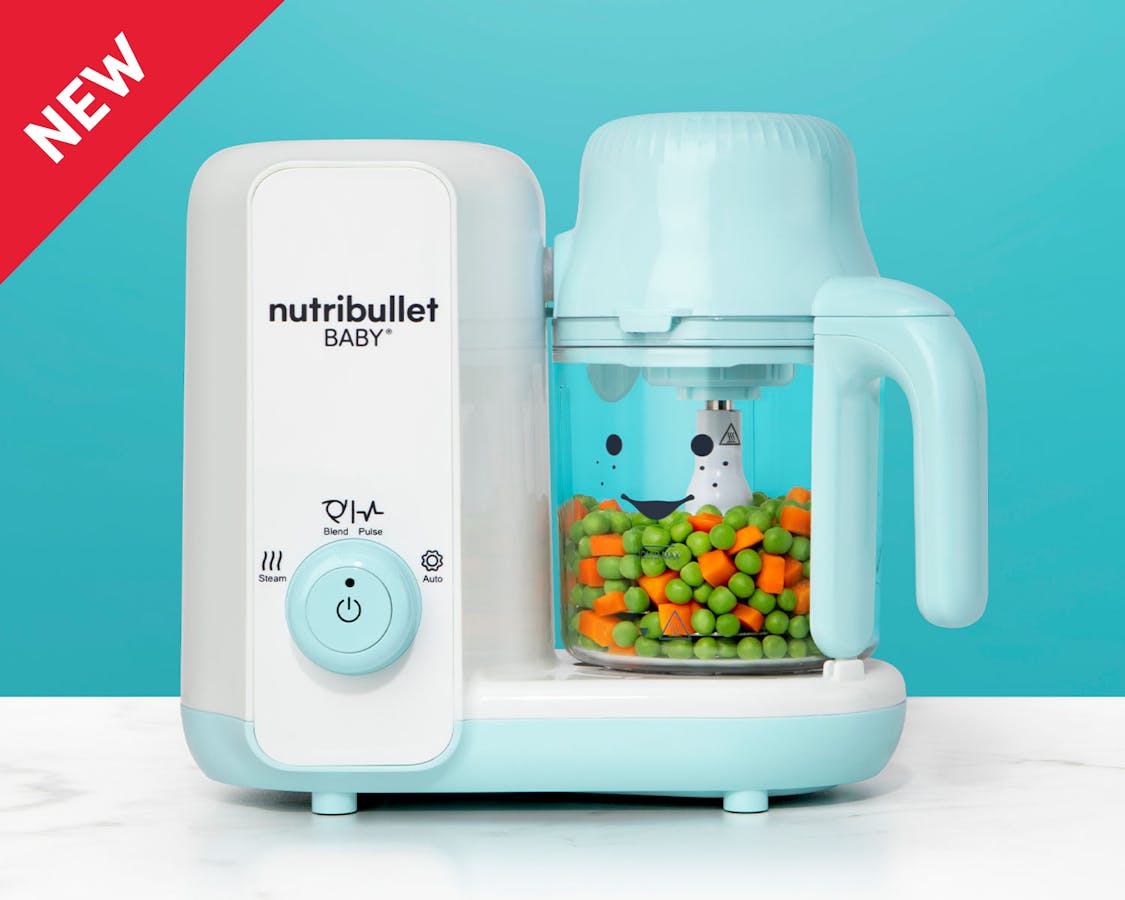
Unplug the power base and let it rest for at least an hour – the blue light should stop blinking once the thermal breaker resets.
2. Check and Clear the Blade Assembly
While the base cools, remove the blending cup and blade assembly. Unscrew the blade unit and inspect the blades and rubber seal:
Remove any large pieces of fruit, ice, or fibrous material stuck around the blades.
Make sure the rubber gasket is seated properly—if it’s misaligned, it can jam the blades.
Spin the blades by hand (carefully) to confirm they rotate freely.
If the blade assembly is damaged (chipped blades, cracked gasket), replace it before using the blender again.
Pay special attention to the small rubber gasket that sits between the blade base and the cup. Over time, food debris can lodge under the gasket and prevent the blades from spinning freely. A quick rinse under warm water and a gentle scrub with a soft brush will often free up a stalled blade. If the gasket is warped or torn, order a replacement directly from Nutribullet – a faulty seal can also cause leaking, which is a separate problem covered in the table below.
3. Reset the Base (Corded Models)
After the cooling period, plug the base back into a different outlet to rule out a faulty wall socket. The blue light should be solid or off—blinking should stop. If the light continues to blink immediately after plugging in (without pressing any button), the thermal breaker may be stuck or the electronic board may be damaged.
4. Recharge the Battery (Wireless Models)
For a cordless Nutribullet, place the motor head on its charging dock and plug the dock in. A blinking blue light during charging is normal on some models—refer to your user manual for the specific light pattern. After 1–2 hours, remove the unit and test it. If the light still blinks when you press the button, the battery may have reached the end of its lifespan.
5. Test With an Empty Cup
Reassemble the cup and blade assembly, but do not add any ingredients . Attach the empty cup to the power base and press down to start the blender. If the motor runs without a blinking light, the problem was a stall or overload. If the light still blinks, the base likely has an internal fault.
Common Mistakes That Trigger the Blinking Blue Light
Even after a successful fix, certain habits can cause the blue light to reappear. Avoiding these mistakes will keep your Nutribullet running reliably:
- Packing the cup too tightly. Dense ingredients like frozen banana chunks or ice cubes can form a solid mass that locks the blades. Always add liquid first, then softer ingredients, and finally ice or frozen fruit on top.
- Using the blender without the lid properly locked. Some models detect a misaligned lid and flash a warning. Double‑click the lid into place until it clicks.
- Ignoring the “cool down” between batches. Making several smoothies back‑to‑back without a short pause is one of the most common causes of repeated thermal trips. As a rule of thumb, if the base feels warm, wait two full minutes before the next blend.
- Overfilling the cup. Filling above the “max” line forces the motor to labor, generating excess heat that trips the breaker. Leave at least an inch of headspace – the liquid needs room to circulate.
If you’ve recently dealt with a similar blinking-light issue on another appliance, you’ll recognise the pattern: stopping what you’re doing and checking the manufacturer’s diagnostic guide first is always the fastest path to a fix. For instance, a Litter Robot 3 blinking blue light often responds to a simple reset, just like the Nutribullet’s thermal breaker.
Preventing the Blinking Blue Light
Most blinking blue light episodes are avoidable with a few simple habits.
Respect the One-Minute Rule
Nutribullet’s official guidance (available on their support page) recommends not running the blender for more than 60 seconds at a time. For thick recipes, pulse instead of holding the button down. If you need a longer blend, stop for 30–60 seconds before restarting.
A good pulse technique is to press the cup down for 10 seconds, release for 5 seconds, then repeat. This gives the motor a brief cooldown between bursts and helps break up stubborn chunks without stalling. Many users find that three or four pulses produce a smoother result than one long blend.
Don’t Overfill the Cup
Overfilling forces the motor to work harder, generating excess heat. Leave at least an inch of headspace in the cup—the liquid needs room to circulate. For frozen or fibrous blends, add liquid first, then solids.
Clean the Blade Assembly Regularly
Food particles left under the blade seal can create friction and lead to jams. Rinse the blade assembly immediately after each use, and disassemble it for a thorough clean every few blends. Routine upkeep is covered in the Nutribullet user guide, and the same careful approach you’d use for keeping a Ninja blender power button blinking at bay applies here.
Let the Blender Rest Between Batches
Even a cool-running motor warms up with use. If you’re making multiple smoothies, wait 2–3 minutes between blends. This simple break is similar to the rest you’d give a water heater status light blinking when its thermostat resets—letting components settle prevents tripping.
Model‑Specific Troubleshooting Tips
While the steps above work for most Nutribullet blenders, a few models have idiosyncrasies worth noting:
- Nutribullet Pro 900 / 1000: These high‑power units are more sensitive to prolonged blending. If you frequently trigger the thermal breaker, try blending thick mixes in two shorter bursts instead of one continuous run.
- Nutribullet Magic Bullet: The older Magic Bullet uses a different motor design. A blinking blue light on this model almost always means the blade assembly is not tightened enough or is cross‑threaded. Remove the cup, realign the threads, and twist until you hear a firm click.
- Nutribullet Go (cordless): The blinking blue light on this model doubles as a low‑battery indicator. If the battery no longer holds a full charge after 2–4 years, replacement motor heads are available. A Frida Humidifier blinking blue light has a similar battery‑related diagnostic pattern, though the fix there involves cleaning the sensor instead.
- Nutribullet Smart Touch: If the blender pairs with an app, a blinking blue light may signal a Bluetooth connection error. Go to your phone’s Bluetooth settings, forget the device, and re‑pair it. If that doesn’t work, a full factory reset (holding the power button for 10 seconds) often resolves it.
For any model, if the blinking light persists after these targeted steps, the problem is likely internal. At that point, contacting Nutribullet support is your best bet – and if you’re comfortable with other appliance troubleshooting, you might also find the diagnostic patterns for a Daikin Mini Split blinking green light surprisingly similar (both use a thermal cut‑off as a first line of defence).
Other Common Nutribullet Problems
The blinking blue light isn’t the only issue you might encounter. Here are related symptoms and fixes.
Symptom Likely Cause Quick Fix
Blender won’t turn on No power, thermal breaker tripped, or dead battery Unplug and cool; charge wireless model
Blades won’t spin Jammed or misaligned blade assembly Clear and reseat blades
Motor smells like burning Overheating or worn bearings Stop immediately; let cool; replace if smell returns
Leaking from the base Cracked cup or loose seal Tighten blade assembly; replace worn parts
Blue light solid but blender does nothing Internal electronic failure Contact support; consider replacement
If you’re diagnosing other blinking-light devices around your home—like a Schlage lock blinking red or a Nest thermostat blinking green light—the same principle applies: check the manufacturer’s diagnostic pattern first. You can apply that same method to a Juul that blinks green 5 times when charging or a Breville filter size blinking indicator – understanding the pattern saves time and prevents unnecessary replacements.
When to Contact Support or Replace
Try the steps above. If the blinking blue light persists after:
Letting the base cool for a full hour
Clearing and reseating the blade assembly
Testing with a different outlet (or recharging)
Running an empty cup
…then the issue is likely an internal hardware fault. At this point, reach out to Nutribullet customer support. Provide your model number and a brief description of what you’ve already tried. Many problems under warranty are covered.
If your unit is out of warranty and the repair cost is high, replacement is often more practical. For a few dollars more than a repair, you can get a new power base or an upgraded model. The same logic applies to any appliance—if you’ve already spent time troubleshooting a Kasa camera blinking red or an Xfinity router blinking blue, you know when it’s time to move on.
Before you decide to replace your Nutribullet, visit the official Nutribullet support page to check if your specific model has a known issue or a free replacement program. Many users find that a simple firmware update (on smart models) or a discounted refurbished base is covered under their product’s lifetime warranty.
Frequently Asked Questions
How long does a Nutribullet thermal breaker take to reset?
Typically 30–60 minutes. The breaker resets when the internal temperature drops below the safety threshold. Unplugging the unit is required—simply turning it off is not enough.
Can I use my Nutribullet if the blue light is blinking but the motor runs?
No. If the light is blinking while the motor runs (rare), stop immediately. This may indicate an electrical short. Unplug the unit and contact support.
Why does my Nutribullet blink blue when I try to charge it?
On wireless models, a blinking blue light during charging is normal on some units. On corded models, the light should not blink while plugged in. Check your model’s user manual for the specific charge indicator pattern.
How do I know if the battery needs replacing on my Nutribullet Go?
If the blender blinks blue after a full charge (2+ hours) and still won’t run, the battery has degraded. Rechargeable batteries typically last 2–4 years depending on usage. Replacement motor heads are available directly from Nutribullet.
Does overheating damage the motor?
Occasional thermal protection is safe—it prevents damage. Repeated overheating, however, will shorten the motor’s lifespan. If you see the blinking light often, reduce blending time and allow longer rests.
Why does my Nutribullet blink blue after I just cleaned it?
If you washed the blade assembly or the cup and didn’t let all parts air‑dry completely before reassembling, moisture can seep into the motor base or the blade bearings. This may cause a temporary electrical fault that triggers the blue light. Disassemble the unit, dry every component with a clean cloth, and allow the base to sit upright for an hour before retesting. If the blinking continues, moisture may have entered the motor housing – contact support.
Conclusion
A blinking blue light on your Nutribullet isn’t a death sentence. In most cases, it’s a protective feature that kicks in to save the motor from overheating or stalling. By unplugging the base, letting it cool fully, clearing any blade obstructions, and respecting the one-minute blending limit, you can restore normal operation in under an hour.
For cordless models, a simple recharge often solves the problem. And if your unit continues to flash after every reset, it’s time to contact Nutribullet support or consider a replacement. Treat the blinking blue light as a helpful warning—not a permanent failure—and your blender will keep spinning for years.
If you’ve tried every step and the blue light persists, head over to the Nutribullet official support page to explore warranty options or order a replacement power base. Getting help from the manufacturer directly is often faster than a third‑party repair, and it ensures your blender works safely for years to come.