If your frigidaire freezer blinking green light has you standing in the garage at midnight wondering whether dinner is ruined, here's the short version. Most of the time, it isn't a breakdown. On Frigidaire chest and upright freezers, a flashing green light is usually the control board telling you it logged a power interruption or a warm-temperature event.
It's an alert, not a verdict.
The meaning shifts with the model and the control panel, though. Frigidaire has shipped mechanical dials, simple neon pilot lamps, and full electronic boards under the same brand name for decades. Per USDA FSIS guidance, frozen food held at 0°F or below stays safe indefinitely, so the real question is whether your cabinet actually warmed up.
That answer decides everything that follows.
Quick Answer
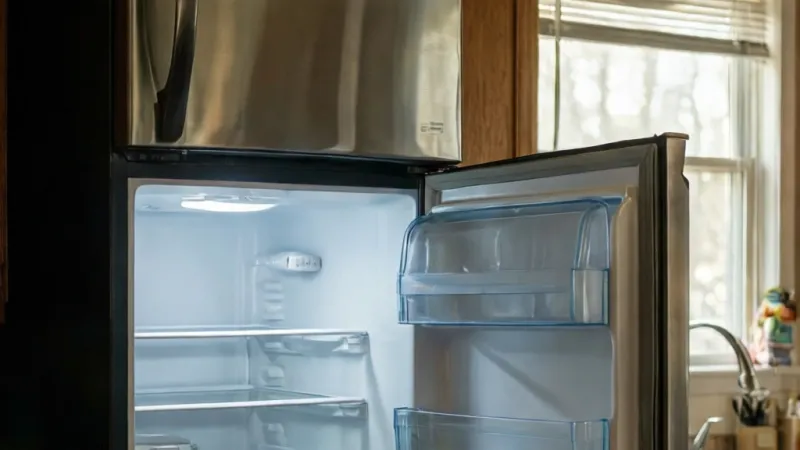
A blinking green light usually means a power interruption. On Frigidaire freezers, it also flags a temperature alarm. The light is a warning, not proof of failure.
Press Alarm Reset and check the real temperature. Food at 0°F is fine. Food above 40°F is a safety problem.
Why the Fix Changes Based on Your Model and Control Panel
Frigidaire has sold freezers under a long list of model prefixes. FFFC covers most chest freezers. FFFU covers upright frost-free units.
FFFH, FFC, LFF, and DFF turn up on older builds and some store-brand variants. The prefix matters because the control hardware changes with it.
Two freezers sitting side by side in a showroom can behave completely differently when the power blinks. One chirps and flashes. The other does nothing at all.
Same brand, same size, totally different logic.
Where to Find Your Frigidaire Model and Serial Number
You need the model number before anything else. Every manual lookup, parts order, and warranty claim starts with that string.
- Inside the lid or door, on the left interior wall
- On the back of the cabinet, near the compressor
- Behind the kick plate on upright models
- On the frame behind the door gasket
Snap a photo of the rating plate with your phone. It saves a second trip to the garage later.
Which Control Type Does Your Freezer Have?
Look at the panel. What you see tells you which troubleshooting branch applies.
| Control type | What you'll see | Light behavior | Typical models |
|---|---|---|---|
| Mechanical dial | Numbered 1 to 7 knob, no display | Simple neon lamp, rarely blinks | Older FFC, LFF |
| Basic electronic | Green LED plus a few buttons | Green solid, green blink, red alarm | FFFC, DFF |
| Full electronic board | Digital temperature display, multiple LEDs | Green, red, amber, plus audible beep | FFFU, Gallery, Professional |
Mechanical dial freezers almost never blink. If yours has a dial and no light at all, the blinking symptom doesn't apply to you. That's a clean elimination step before you spend a dollar.
Why Two Frigidaire Freezers Behave Differently
Control board generations differ. A board built in 2012 may treat a two-second brownout as a non-event. A board built in 2024 may flag it and hold the light until you acknowledge it.
As of 2026, Frigidaire's current lineup leans heavily on electronic boards with explicit power-fail memory.
Ambient sensors matter too. Garage-ready models carry wider temperature tolerances than kitchen-only units. A freezer rated for 0°F to 110°F ambient handles a cold snap differently than one rated for 55°F to 110°F.
You can confirm your unit's rating in the official Frigidaire support documentation for your model.
How the Frigidaire Indicator Light System Works (Green, Red, and Amber)
Green is the power and status color. On most Frigidaire freezers, a steady green light means the cabinet has power and the board sees nothing wrong. It's the "all normal" signal.
A blinking green light means the board has something to tell you. It's a notification first, a fault second. That distinction is the whole reason so many people panic over a freezer that's running perfectly.
What Solid Green Means
Solid green means normal operation. The compressor cycles as needed, the board is powered, and no alarm is active. If the freezer feels cold and the light is steady, you don't have a problem to solve.
What Blinking Green Means
Blinking green means an unacknowledged event. That event is usually one of four things:
- A power interruption the board recorded
- A high-temperature alarm that already corrected itself
- A door-ajar alarm that has since cleared
- A demo or display mode that's still active
Notice what's missing from that list. A blinking green light is not, by itself, a compressor failure. It's not a refrigerant leak.
It's not a sealed system problem. Those show up as red lights, audible alarms, or a freezer that won't get cold.
What Red and Amber Add to the Picture
Red is the alarm color. On Frigidaire freezers that carry a red indicator, a red light means the cabinet temperature climbed above the alarm threshold. If red and green both blink, the board is telling you the power was interrupted and the temperature rose during the outage.
Amber or yellow, when present, usually signals a warning state rather than a full alarm. Think of it as a yellow traffic light. Something needs attention, but nothing has failed yet.
Does Every Frigidaire Freezer Have the Same Lights?
No, and this trips people up constantly. Some models carry only a single green LED. Some carry green plus red.
Higher-end Gallery and Professional units often add amber and a digital display. Here's the practical mapping.
| Color and state | What it means | What to do |
|---|---|---|
| Solid green | Normal operation | Nothing |
| Blinking green | Unacknowledged power or temp event | Press Alarm Reset, verify temperature |
| Solid red | Active high-temperature alarm | Check door, check temperature, act fast |
| Blinking red | Active fault, often sensor or board | Check temperature, call service if warm |
| Amber or yellow | Warning, often door or defrost related | Inspect gasket and lid alignment |
If your freezer only has a green light, you're missing the red and amber layers. That means temperature checking becomes your job, not the board's.
First: Is Your Freezer Still Actually Cold? The One Check That Decides Everything
Temperature, not the light, decides your next move. The light is a message. The thermometer is the truth.
Frigidaire specifies 0°F (-18°C) as the target cabinet temperature. The food-safety line sits at 40°F (4°C). Those two numbers frame every decision you're about to make.
Per the USDA Food Safety and Inspection Service, food held above 40°F for more than two hours should be discarded. A full freezer holds safe temperature for roughly 48 hours with the door kept closed. A half-full freezer holds for about 24 hours.
How to Check Temperature Properly
Do this before you touch any buttons. You want a clean reading, not a guess.
- Place an independent thermometer in the center of the cabinet, between packages.
- Don't trust the door display alone. It reads the sensor, not the food.
- Wait 5 to 10 minutes for the probe to stabilize.
- Take a second reading near the front of the cabinet.
- Note both numbers and the time.
An inexpensive dial or digital fridge thermometer works fine. You're looking for a trend, not lab-grade precision.
Temperature Reading vs What to Do
| Reading | What it means | Your next move |
|---|---|---|
| 0°F or below | Cabinet is fine | Clear the alarm, watch for a repeat |
| 1°F to 39°F | Mild warm-up, food still safe | Check door seal, reset alarm, monitor |
| 40°F or above | Food safety risk | Apply the two-hour rule before refreezing |
What If the Display Shows a Number but the Food Feels Soft?
Trust the thermometer over the display. Soft packages near the top of an upright freezer can mean warm air pooled there during a short outage. Soft packages at the bottom of a chest freezer usually mean a longer event.
Check for ice crystals on the packaging. Heavy frost inside a package means it thawed and refroze. That's a texture and quality issue more than a safety one, but it tells you the outage lasted a while.
Why This Step Comes Before Any Reset
Here's the trap. If you press Alarm Reset first, the light goes off and you lose your only record that something happened. Check temperature first, write it down, then reset.
You'll know within minutes whether this was a false alarm or a real event.
Branch 1: The Freezer Is Cold and the Light Is Blinking: Alarm Reset and Power-Fail Acknowledgment
If the cabinet sits at 0°F and the light blinks, you're almost certainly looking at an unacknowledged power-fail alert. This is the most common branch by a wide margin. It's also the easiest to resolve.
Frigidaire's power-fail alert is designed to stay visible until a human acknowledges it. The board is doing exactly what it was built to do. It's not broken.
It's waiting on you.
Why the Light Keeps Blinking After the Power Comes Back
The board stores the event in memory. Power returning doesn't erase it. Only a manual acknowledgment clears it on most models.
Think of it like a smoke detector that already stopped sensing smoke. The alarm keeps sounding until you press the button. The danger passed, but the notification didn't.
Step-by-Step: Clearing the Alarm
- Locate the Alarm Reset or Alarm Off button on the control panel.
- Press and hold it for about 3 seconds. Some models need a quick tap instead, so check your Use & Care Guide.
- Listen for a beep or chirp. That confirms the input registered.
- Watch the green light. It should stop blinking and go solid, or turn off entirely depending on your model.
- Wait 10 minutes. Don't walk away yet.
- If the light stays off and the freezer is cold, you're done.
On models with a digital display, the panel may also show a "PF" or "Power Fail" indicator that clears with the same button press. On others, the temperature display returns to normal after a few seconds.
What If the Light Won't Clear at All?
If holding the button does nothing, you may be in demo mode instead. Demo mode is a separate branch and it behaves differently. The compressor often won't run at all, and the light pattern is steady rather than reactive.
Check whether the freezer is actually cooling. If it's cold and the light still won't clear, the button itself may have failed. That's a control panel replacement, not a reset.
If the Light Comes Back, Timing Tells You Why
The interval between clearing the alarm and seeing it return is a diagnostic clue. Minutes point to a real fault. Days point to something intermittent in your power supply.
| When the light returns | Likely cause | Next step |
|---|---|---|
| Within minutes | Active fault, sensor, or board issue | Check temperature, move to Branch 2 |
| Within hours | Door seal, gasket, or lid alignment | Run the dollar-bill gasket test |
| Within days | Brownouts, loose plug, shared circuit | Test the outlet, check for a dedicated circuit |
| Only after storms | Utility power quality | Consider a surge protector or UPS |
The Dollar-Bill Gasket Test
Run this before you call anyone. It takes 30 seconds and it catches a huge share of repeat alarms.
Close a dollar bill in the door so half hangs out. Pull it out slowly. You should feel light resistance.
If it slides out with no drag, the gasket isn't sealing there. Walk the bill around all four sides and note the loose spots.
A gasket that fails the test lets warm, humid air in. That triggers temperature alarms on humid days and drives frost buildup along the seal.
When to Stop Resetting and Start Diagnosing
If you've cleared the alarm twice in a week and the freezer stays cold, you're not in Branch 1 anymore. You're dealing with an intermittent cause that needs tracking, not acknowledgment. Move to the door, power, and board branches before you spend money on parts.
What If Your Model Has No Alarm Reset Button
Not every Frigidaire freezer gives you a button to press. Basic FFFC chest models and older mechanical units often have nothing but a single green lamp and a dial.
On those units, the light typically clears itself once the cabinet returns to normal temperature. There's no memory to acknowledge and no event log to clear. If your freezer has no buttons at all, the blinking is coming from something else, and you should treat it as a temperature signal rather than a notification.
For electronic models without a dedicated Alarm Reset key, Frigidaire often assigns the function to a shared button. Common assignments include holding the Temperature Down key for 3 seconds, or pressing Freezer Temp and Power together. Your Use & Care Guide lists the exact combination for your model, and guessing wrong can drop the unit into a settings menu you'll then need to exit.
A Hard Reset When the Panel Is Unresponsive
If the panel won't respond to any input, a full power cycle is the next step. It's safe, it's free, and it clears the board's working memory.
- Unplug the freezer from the wall outlet.
- Wait a full 5 to 10 minutes. This lets the board capacitors discharge.
- Plug it directly into the wall. Skip the extension cord and the power strip.
- Listen for the compressor to start within a few minutes.
- Watch the light. It should come up solid green.
- Give it 24 hours before judging the result.
Don't cycle the power repeatedly. Each restart puts load on the compressor and the start relay, and back-to-back restarts can trip the overload protector. One clean cycle is a diagnostic step.
Five in an hour is how you turn a small problem into an expensive one.
Reading the Result After a Power Cycle
The freezer tells you what it thinks within a day. Pay attention to which signal comes back and when.
- Solid green and holding 0°F: the event was a one-off power interruption. You're done.
- Blinking green again within 24 hours: the board is logging a real condition. Move to Branch 2.
- Green light on, freezer warm after 24 hours: the compressor may not be running at all. Move to Branch 6.
- No light at all: you've lost power to the unit, not just an alarm. Move to Branch 5.
Write down the time you plugged it back in. That timestamp is the reference point for every reading you take afterward, and it's the first thing a technician will ask you for.
Branch 2: The Freezer Is Warm: Real Faults, Real Timelines, and What to Do First
If the cabinet reads above 40°F, you're past the false-alarm stage. This is a real event, and the clock started when the temperature crossed that line. Your priorities change completely.
Food safety comes first. Diagnosis comes second. Don't spend an hour on the control panel while a hundred pounds of meat sits at 45°F.
The Two-Hour Rule and What It Actually Means
Per USDA FSIS guidance, perishable food held above 40°F for more than two hours should be thrown out. That window shortens to one hour if the ambient temperature around the freezer is above 90°F.
Here's the part most people miss. The clock doesn't start when you notice the problem. It starts when the food actually crossed 40°F, which you can't know precisely.
So the safe assumption is that the clock started earlier than you think.
Food Triage by Category
Not all frozen food behaves the same way. Some items are far more forgiving than others.
| Food type | Safe to refreeze after mild warm-up? | Notes |
|---|---|---|
| Raw meat and poultry | No, if above 40°F over 2 hours | Highest risk category |
| Cooked leftovers | No, same threshold | Bacteria already present |
| Bread, baked goods | Usually yes | Quality loss only |
| Hard cheese | Usually yes | Texture may crumble |
| Ice cream | No | Discard if fully melted |
| Frozen vegetables | Yes, if still icy | Quality drops, safety holds |
| Fruit | Usually yes | Softens on thaw |
| Nuts and coffee | Yes | Flavor degrades |
When in doubt, throw it out. The cost of replacing food is almost always lower than the cost of a foodborne illness, and no freezer repair is worth gambling on that.
Is the Compressor Even Running?
Put your hand on the side of the cabinet. You should feel warmth and a faint vibration if the compressor is running. Listen for a low hum near the back.
If you feel nothing and hear nothing, the compressor isn't running. That points toward a power, control board, or start component problem. If the compressor is running but the freezer stays warm, that points toward a sealed system issue.
How Long Before the Freezer Should Recover?
A freezer that's been off for a few hours should pull back down to 0°F within 12 to 24 hours once it's running normally. A fully warm cabinet that sat overnight can take 24 to 48 hours.
Don't judge the repair after 30 minutes. Give it a full day before you decide anything worked.
What Warm Temperatures Do to the Sealed System
Prolonged warm operation stresses the compressor. It runs longer, gets hotter, and pulls more current. On a unit that's already marginal, this can push the start relay or overload protector over the edge.
If the freezer was warm for more than a day, expect the possibility of a secondary failure. Fix the root cause, then watch closely for the next week.
When Warm Means Call a Technician
Call for service if any of these are true:
- The compressor runs constantly but the cabinet stays above 20°F
- You hear clicking every few minutes from the back
- The compressor is hot to the touch but silent
- The freezer won't recover after 48 hours of running
- You see oil residue or frost on the sealed system lines
Those symptoms point to refrigerant, compressor, or start component problems. None of them are DIY territory, and none of them are fixed by pressing a button.
Branch 3: Stuck in Demo Mode After Delivery or a Button Mishap
Demo mode is the single most misdiagnosed symptom on Frigidaire freezers. It looks like a total failure. The light is on, the panel works, but the freezer never gets cold.
Here's why. Demo mode, sometimes labeled display mode or showroom mode, powers the control panel while keeping the compressor off. It's designed for retail floors so the lights look alive without the energy draw.
How Demo Mode Gets Triggered
A button combination does it, usually a long press on two keys at once. Delivery crews trigger it while moving the unit. Kids trigger it.
So does a cleaning cloth dragged across the panel.
On some Frigidaire models, demo mode activates if the panel is held for 5 to 10 seconds during the first power-up. That's exactly what happens when someone plugs the unit in while leaning against it.
Signs You're Actually in Demo Mode
Watch for this specific combination.
- The green light is on but not blinking in a temperature-alarm pattern
- The compressor never runs, even after an hour
- The cabinet stays at room temperature indefinitely
- The display responds to button presses normally
- No error code appears
If the freezer is warm, the light is lit, and nothing hums, demo mode is the first thing to rule out. It's a two-minute fix that saves a service call.
How to Exit Demo Mode on Frigidaire Freezers
The exact sequence varies by model. These are the combinations Frigidaire has used across its electronic control lines.
| Control layout | Exit sequence | Hold time |
|---|---|---|
| Two-button panel | Press and hold both Temp keys | 5 seconds |
| Three-button panel | Hold Alarm Reset and Temp Up | 3 to 5 seconds |
| Gallery digital | Hold Freezer Temp and Power | 5 seconds |
| Upright with display | Hold Set and Temp Down | 3 seconds |
Your Use & Care Guide lists the exact combination for your model. If you don't have the paper copy, Frigidaire's support site hosts PDFs by model number.
What to Do If the Sequence Doesn't Work
Try the power cycle first. Unplug for 10 minutes, plug back in, and watch what happens on startup. Some boards exit demo mode automatically after a full power loss.
If the panel still shows the demo behavior, the sequence for your specific model is different. Look up the manual rather than guessing. Wrong button combinations can lock the panel or drop you into a service menu that requires a technician to exit.
How to Confirm You're Out of Demo Mode
You'll know within 15 minutes. The compressor should kick on and the cabinet should start cooling. Put your hand on the side and feel for warmth.
If the compressor starts and the freezer begins pulling down, you fixed it. If nothing changed, demo mode wasn't the problem, and you should move to Branch 4 or Branch 5.
Branch 4: Door, Gasket, and Lid Problems That Trip the Alarm
A freezer with a bad seal runs warm, works harder, and trips the same alarms a real fault would. The frustrating part is that it looks fine. The door closes.
The lid sits flat. The gasket just doesn't seal.
This branch catches a huge share of repeat blinking-light complaints, especially on chest freezers in humid climates.
The Dollar-Bill Gasket Test, Step by Step
You already saw this test in Branch 1. Here's how to run it thoroughly.
- Open the freezer and place a dollar bill across the gasket edge.
- Close the lid or door firmly.
- Pull the bill out slowly at a steady angle.
- Note the resistance. Light drag is normal. Zero drag is a leak.
- Repeat every 6 inches around the entire perimeter.
- Mark the loose spots with a piece of tape on the outside.
Do this on all four sides plus the corners. Corners fail first on chest freezers because the gasket bends there every time you open the lid.
Chest Freezer Lid Alignment
Chest freezer lids warp. It's not a defect. It's what happens when a heavy lid sits on a hinge for a decade, or when someone leans on the open lid.
Check alignment by closing the lid and running your hand along the seam. You should feel even contact all the way around. High spots and gaps mean the hinge needs adjustment.
Most Frigidaire chest freezers have adjustable hinges or shims. The manual shows the procedure. It's usually two bolts and a bit of patience.
Upright Freezer Door Sag
Upright doors sag over time. The top hinge takes most of the load, and the bottom corner drifts out of alignment. That gap lets warm air in along the bottom edge.
Test it by opening the door halfway. It should hold position. If it swings shut on its own or drifts open, the hinge or the leveling is off.
Leveling matters more than people expect. A freezer that's tilted forward will let the door drift open. Tilted back, the door closes itself.
Frigidaire's install instructions call for a slight backward tilt for exactly this reason.
Frost Bridging and Ice Along the Seal
Frost along the gasket line is a clear sign of air infiltration. Warm, humid air hits the cold seal and freezes. Over weeks, it builds into a bridge that holds the door open slightly.
- Chip frost away with a plastic scraper, never a metal one.
- Dry the gasket thoroughly with a towel.
- Run the dollar-bill test again.
- Check for the same frost pattern two weeks later.
If frost returns in the same spot, the gasket isn't sealing there. Cleaning won't fix it. Replacement will.
When to Replace a Gasket
Replace the gasket if any of these apply:
- The rubber is hard, cracked, or visibly compressed
- The dollar-bill test fails in more than one spot
- Frost returns within two weeks of cleaning
- The gasket pulls away from the door frame
- The freezer is more than 8 to 10 years old and the seal has never been replaced
Frigidaire gaskets are model-specific and run roughly $30 to $80. Installation is a DIY job on most models. It takes about 30 minutes with a screwdriver and a hair dryer to soften the new gasket for a proper fit.
The Lid Left Open Overnight Scenario
This happens more than anyone admits. Someone loads the freezer, gets distracted, and the lid sits cracked for 10 hours. The freezer warms, the alarm trips, and the light blinks.
Check for this before you diagnose anything mechanical. Look for a soft layer of frost on the top packages, condensation on the interior walls, or a slightly damp gasket. Those are the fingerprints of an open-lid event.
If that's what happened, close the lid, clear the alarm, and give the freezer 24 hours. No repair needed. The blinking light was doing its job.
Branch 5: Power, Outlet, and Board Issues (Brownouts, GFCI, and Surges)
Sometimes the freezer is fine and your electricity isn't. Brownouts, loose plugs, shared circuits, and GFCI trips all produce the same blinking green light as a real fault.
This branch matters most in older homes, rural areas, and any garage with a shared circuit.
Testing the Outlet Properly
Don't just look at it. Test it.
- Plug a lamp or phone charger into the same outlet.
- Confirm it works.
- Check whether the outlet is on a GFCI. Look for a Test and Reset button nearby.
- Press Reset if the GFCI has tripped.
- Check the breaker panel for a tripped breaker.
- Confirm the freezer has its own circuit if possible.
Frigidaire freezers need a dedicated 115V, 60Hz, 15-amp circuit. Running one on a circuit shared with a garage door opener, a space heater, or power tools invites nuisance trips and voltage drops.
Why Extension Cords and Power Strips Are a Problem
Manufacturer instructions for every Frigidaire freezer say the same thing. Plug it directly into a wall outlet. No extension cord.
No power strip. No daisy chain.
The reason is voltage drop. A long cord or a cheap strip reduces the voltage reaching the compressor. The compressor draws more current to compensate, which heats the wiring and stresses the start components.
It also confuses the control board, which can trigger the blinking light.
If the outlet is too far away, have an electrician install a dedicated outlet near the freezer. That's a one-time cost that prevents years of intermittent problems.
Brownouts and Voltage Sags
A brownout is a partial voltage drop, not a full outage. Lights dim, motors slow, and the freezer's control board may reset. The board logs the event and the green light blinks.
Brownouts are common in rural areas, during summer peak demand, and on any grid with aging infrastructure. As of 2026, most Frigidaire electronic boards record these events in memory.
If your freezer blinks after every storm or heat wave, the problem isn't the freezer. It's the power supply.
Surge Protection Worth Having
A whole-house surge protector at the panel is the best protection. A quality plug-in surge protector rated for appliances is the next best option, as long as it doesn't sit between the freezer and a shared circuit.
Avoid cheap power strips. They offer minimal protection and add a fire risk. Look for a surge protector with a joule rating above 1,000 and a connected-equipment warranty.
A small uninterruptible power supply, or UPS, will keep the control board alive through short outages. It won't run the compressor, but it keeps the board from logging a hard reset.
GFCI Nuisance Tripping
Garage outlets are usually GFCI-protected, and that's required by code in most jurisdictions. Freezers sometimes trip GFCIs, especially older ones with slight moisture intrusion in the compressor circuit.
If your GFCI trips repeatedly, don't replace it with a standard outlet. That's a code violation and a shock risk. Instead, have an electrician check the freezer's grounding and the outlet's wiring.
Sometimes the GFCI itself is failing.
When the Board Itself Is the Problem
Control boards fail. They fail after surges, after lightning strikes, and sometimes for no clear reason at all. Signs of a failed board include:
- The panel is dead but the outlet works
- Buttons don't respond at all
- The display shows scrambled or partial segments
- The light blinks in an irregular pattern no manual describes
- The compressor never starts despite good power
Frigidaire control boards for freezers typically run $150 to $400 for the part. Add labor and you're looking at $250 to $550 total. On a freezer worth $400, that math doesn't always work in favor of repair.
Checking for Recalls Before You Buy Parts
Before ordering a board or any component, check the CPSC recall database. Frigidaire, like every major appliance maker, has issued recalls over the years. If your model is covered, the manufacturer may repair or replace it at no cost.
You'll need your model and serial number. That's the photo you took in the first section. This step takes five minutes and has saved people hundreds of dollars.
A Note on Model-Specific Board Behavior
Frigidaire has used several board suppliers over the years, and their behaviors differ. Some boards hold the power-fail flag indefinitely. Others auto-clear after 72 hours of normal operation.
If your freezer's light clears itself after a few days with no intervention, that's the board doing its job. It doesn't mean the event didn't happen. It means the board decided the situation resolved.
Branch 6: Compressor, Start Relay, and Sealed System Symptoms You Shouldn't DIY
This is where the blinking green light is a symptom of something serious. If you've made it here, the freezer is warm, the compressor isn't running properly, and the easy fixes didn't stick.
Sealed system work requires EPA Section 608 certification. That's not a formality. Refrigerant handling is regulated for good reason, and venting refrigerant to the atmosphere is illegal.
How to Tell If the Compressor Is Running
Put your hand on the compressor at the back of the unit. It's the black dome-shaped can near the bottom.
- Warm and vibrating: compressor is running
- Warm and silent: compressor is trying to run but stalled
- Cold and silent: compressor isn't getting power
- Very hot and clicking: overload protector is tripping
Each of those states points to a different component. None of them are diagnosed by pressing buttons on the front panel.
The Clicking Sound That Means Trouble
Clicking every few minutes from the back of the freezer is a classic symptom. Here's what's happening.
The compressor tries to start. The overload protector senses too much current and cuts power. The compressor cools, the protector resets, and the cycle repeats.
Click, hum, silence. Click, hum, silence.
Common causes include:
- A failed start relay, the small device that kicks the compressor into motion
- A failed run capacitor
- A seized compressor
- Low refrigerant, which makes the compressor work harder
- A failing overload protector itself
A start relay is a $20 to $50 part and a common DIY replacement on some models. A compressor is a $400 to $700 job that requires a licensed technician.
Symptoms That Point to a Refrigerant Leak
Refrigerant leaks are slow and sneaky. Watch for these signs.
- The freezer runs constantly but never gets below 20°F
- Frost patterns on the evaporator are uneven, with warm patches
- The compressor is very hot to the touch
- You see oily residue on the sealed system lines
- The freezer worked fine for years and then gradually stopped cooling
Refrigerant doesn't get "used up." If it's low, it leaked. Topping it off without finding and repairing the leak is a temporary patch that costs money and never solves the problem.
Why You Shouldn't Bypass the Overload Protector
Some online advice suggests jumpering the overload protector to force the compressor to run. Don't. That component exists to protect the compressor from burning out and to protect your home from a fire.
Bypassing it can cause the compressor to overheat, seize, or in extreme cases start an electrical fire. It also voids the warranty. There's no scenario where this is a good idea.
When the Repair Cost Exceeds the Value
Once you're looking at a compressor replacement or a sealed system repair, the math changes. A $500 repair on a $400 freezer is a losing proposition.
Signs it's time to stop repairing:
- Compressor replacement is quoted above 50% of a new unit
- The freezer is more than 12 years old
- You've already paid for two service calls this year
- The sealed system has failed and the unit isn't under warranty
- Rust is visible on the cabinet or the interior liner
Frigidaire's standard warranty is one year parts and labor. Sealed system coverage typically extends to five years on the compressor and refrigerant circuit. Check your specific model's warranty card before assuming you're paying out of pocket.
Step-by-Step Reset Workflow: From Model Number to Final Decision
Here's the complete flow in one place. Work it top to bottom and you'll land on the right answer for your situation.
Step 1: Identify Your Unit
Find the model and serial number plate. Note the control type. Snap a photo.
You'll need this for any manual lookup, parts order, or service call.
Step 2: Record the Symptom
Write down what you see. Is the light solid or blinking? Is there a red or amber light too?
Is the display showing anything? Is there an audible beep?
Details matter. "The green light blinks about once per second and the display shows 45°F" tells a technician far more than "it's blinking."
Step 3: Check the Actual Temperature
Place an independent thermometer in the center of the cabinet. Wait 5 to 10 minutes. Write down the reading and the time.
This single step splits the entire diagnostic tree in half.
Step 4: Press Alarm Reset
If your model has the button, press and hold it. Listen for the beep. Watch the light.
Step 5: If Needed, Power Cycle
Unplug for 5 to 10 minutes. Plug directly into the wall. Note the time.
Step 6: Rule Out Demo Mode
If the freezer is warm and the compressor never starts, check the manual for your exit sequence. Try it once.
Step 7: Inspect the Seal
Run the dollar-bill test around the entire gasket. Note any loose spots.
Step 8: Verify the Power Supply
Test the outlet with another device. Check the GFCI. Check the breaker.
Confirm the freezer is on a dedicated circuit.
Step 9: Apply Food Safety Rules
If the cabinet went above 40°F for more than two hours, discard the risky items. Don't refreeze raw meat that spent hours in the danger zone.
Step 10: Decide Your Path
| Situation | Action |
|---|---|
| Cold freezer, cleared alarm | Monitor for one week |
| Cold freezer, alarm returns weekly | Check gasket, outlet, and power quality |
| Warm freezer, compressor running | Call a technician, possible sealed system issue |
| Warm freezer, compressor silent | Check board, relay, and power supply |
| Warm freezer, repair over 50% of new cost | Replace the unit |
Step 11: Document Everything
Keep a simple log. Date, time, temperature, what you did, what happened. If you end up calling Frigidaire support or filing a warranty claim, that log is worth its weight in gold.
Food Safety Triage: When to Refreeze, When to Toss, and How Long You Have
This section exists because the blinking light is often less important than what it's telling you about your food. Get this part wrong and the cost isn't a repair bill. It's a trip to the emergency room.
The Core Numbers
Memorize these. They come from USDA FSIS and they apply to every freezer, every brand.
- 0°F: the target freezer temperature
- 40°F: the food safety threshold
- 2 hours: maximum time above 40°F before discard
- 1 hour: that window if ambient temperature is above 90°F
- 48 hours: safe hold time for a full freezer with the door closed
- 24 hours: safe hold time for a half-full freezer
What "Still Has Ice Crystals" Actually Means
If a food item still has ice crystals and feels freezer-cold, it can usually be refrozen. The quality may drop, but the safety is intact. This rule applies to most foods.
The exception is anything that was fully thawed and sat above 40°F for two hours or more. Ice crystals don't save that.
Refreezing by Food Type
| Food | Refreeze if icy? | Refreeze if fully thawed but cold? | Discard if above 40°F over 2 hours? |
|---|---|---|---|
| Raw poultry | Yes | No | Yes |
| Raw beef | Yes | No | Yes |
| Raw fish | Yes | No | Yes |
| Cooked meals | Yes | No | Yes |
| Bread and baked goods | Yes | Yes | No |
| Hard cheese | Yes | Yes | No |
| Frozen vegetables | Yes | Yes | No |
| Ice cream | No | No | Yes |
| Fruit | Yes | Yes | No |
The Smell Test Is Not a Safety Test
Never taste thawed food to judge whether it's safe. Pathogens that cause serious illness often don't change the smell, taste, or appearance of food. If you're unsure, throw it out.
That's not wasteful. That's the standard USDA guidance, and it exists because people get sick every year trying to save a few dollars of groceries.
How to Handle a Long Outage
If the power was out for more than a day, assume the freezer warmed significantly. Open it once, check the temperature, and close it. Every time you open the door, you lose cold air.
If you have access to dry ice or block ice, add it to the cabinet. Dry ice should be handled with gloves and placed on cardboard, not directly on food. Twenty-five pounds of dry ice will hold a full 10-cubic-foot freezer for two to three days.
After the Event: Cleaning and Restarting
Once power is restored and the freezer is back to temperature, clean up before reloading.
- Remove all food and discard anything questionable.
- Wipe the interior with a mild baking soda solution.
- Dry thoroughly. Moisture breeds odor and mold.
- Let the freezer run empty for a few hours to confirm it holds temperature.
- Reload with fresh food and note the date.
If the freezer had a significant thaw, expect a lingering odor. A bowl of activated charcoal or coffee grounds left inside for a week usually clears it.
Common Mistakes That Make a Blinking Green Light Worse
Most of the costly outcomes here start with a small mistake. Avoid these and you'll save both money and food.
Pressing Buttons Without Checking Temperature First
This is the big one. Clearing the alarm erases the record of the event. Check temperature first, write it down, then reset.
You lose nothing by waiting two minutes.
Assuming the Light Means the Freezer Is Broken
It usually doesn't. A blinking green light is a notification. Most of the time the freezer is running fine and the board is waiting for you to acknowledge a past event.
Repeatedly Power Cycling the Unit
One clean power cycle is a diagnostic step. Five in an hour is abuse. Each restart stresses the compressor and the start relay.
You can turn a $20 relay problem into a $600 compressor problem this way.
Ignoring a Second or Third Alarm
One blink is a notification. Three in a month is a pattern. Intermittent causes get worse, not better, and they usually fail at the worst possible time.
Using an Extension Cord
Manufacturer instructions for Frigidaire freezers explicitly prohibit extension cords. They cause voltage drop, confuse the board, and stress the compressor. If you need a longer reach, install an outlet.
Skipping the Gasket Check
The dollar-bill test takes 30 seconds. It catches a large share of repeat alarm cases. Skipping it means you might replace a control board to fix a problem that a $50 gasket would have solved.
Refreezing Food That Sat Warm
The freezer doesn't sterilize food. Refreezing stops bacterial growth. It doesn't undo the growth that already happened.
Apply the two-hour rule honestly.
Replacing Parts Without Confirming the Diagnosis
Don't order a control board because someone on a forum had a similar symptom. Test the outlet. Test the gasket.
Confirm the compressor state. Diagnose, then buy.
Missing the Warranty Window
Frigidaire's standard warranty is one year parts and labor. The sealed system typically runs five years. If your freezer is inside either window, call Frigidaire before you pay anyone.
The savings can be hundreds of dollars.
Not Checking for Recalls
CPSC recalls happen. When they do, the manufacturer covers the repair. It takes five minutes to check and can save you the entire cost of a fix.
Repair or Replace? Costs, Warranty Coverage, and the 50% Rule
At some point the question stops being "what's wrong" and becomes "is this worth fixing." Here's how to answer it without emotion.
Typical Repair Costs
| Repair | Parts | Labor | Total range |
|---|---|---|---|
| Gasket replacement | $30 to $80 | $0 to $150 | $30 to $230 |
| Alarm reset or demo mode exit | $0 | $0 | $0 |
| Start relay replacement | $20 to $50 | $100 to $200 | $120 to $250 |
| Control board replacement | $150 to $400 | $100 to $200 | $250 to $600 |
| Thermistor replacement | $20 to $60 | $100 to $200 | $120 to $260 |
| Compressor replacement | $250 to $450 | $250 to $400 | $500 to $850 |
| Sealed system repair | $200 to $500 | $200 to $400 | $400 to $900 |
Typical Replacement Costs
A new Frigidaire chest freezer runs about $250 to $800 depending on size. Upright frost-free models run $400 to $1,200. Garage-ready units sit at the higher end.
The 50% Rule
If the repair cost is more than half the price of a comparable new freezer, replace it. That's the standard rule of thumb in the appliance industry, and it holds up in practice.
The reasoning is simple. Once you're paying for major surgery on an older unit, you're likely to face another failure soon. A new freezer comes with a fresh warranty and better efficiency.
When Repair Still Makes Sense
Repair wins in these cases:
- The freezer is under warranty
- The repair is a gasket, relay, or thermistor
- The unit is less than 8 years old
- You have a high-end model where replacement is expensive
- The repair cost is under $200
When Replacement Wins
Replace the freezer if:
- The compressor or sealed system has failed on an out-of-warranty unit
- The freezer is over 12 years old
- You've had multiple failures in the past year
- The repair quote exceeds 50% of a new unit
- You're seeing rust or structural damage
Efficiency as a Tiebreaker
A 15-year-old freezer uses significantly more electricity than a current ENERGY STAR model. If you're on the fence, run the numbers on your utility rate. Sometimes the efficiency gain pays for the replacement over a few years.
Maintenance Habits That Keep the Green Light Steady
A freezer that gets basic maintenance trips fewer alarms and lasts longer. None of this is complicated. It's 20 minutes a couple of times a year.
Clean the Condenser Coils
Dusty coils make the compressor work harder and run hotter. On most Frigidaire freezers, the coils are behind a panel at the back or under the front kick plate.
- Unplug the freezer first.
- Vacuum the coils with a brush attachment.
- Use a coil brush for the stubborn buildup.
- Do this every 6 to 12 months.
- More often if you have pets or a dusty garage.
Check the Gasket Every Six Months
Run the dollar-bill test twice a year. Wipe the gasket with warm water and mild soap. Avoid petroleum-based cleaners, which dry out rubber.
A light coat of silicone-based lubricant on the gasket keeps it pliable and improves the seal. That's a 30-second job with real payoff.
Keep the Freezer Level
A freezer that's out of level lets the door drift. Check with a bubble level and adjust the feet. Frigidaire's install guidance calls for a slight backward tilt so the door closes on its own.
Maintain Clearance Around the Unit
Frigidaire specifies 2 to 3 inches of clearance behind and around the freezer. That airflow keeps the compressor cool and helps the cabinet hold temperature efficiently.
Don't shove the freezer flush against a wall. Don't stack boxes on top of a chest freezer. Both restrict airflow and drive up operating temperature.
Watch the Ambient Temperature
Garage-ready Frigidaire freezers handle ambient ranges from roughly 0°F to 110°F. Kitchen-only models are narrower. If your freezer lives in a garage, confirm it's rated for that location.
In hot climates, a freezer in an unshaded garage works much harder in summer. In cold climates, a freezer in an unheated garage may struggle to start in winter. Neither is a defect.
Both are conditions to plan for.
Use a Power-Failure Alarm
A standalone power-failure alarm plugs into the outlet and sounds when power is lost. It's cheap insurance for a freezer full of food. Some models also log temperature history, which is useful when you're trying to decide whether food is safe.
Keep a Freezer Inventory
Know what's in there and when it went in. A simple list taped to the lid works. So does a phone note.
When an alarm trips, you'll know exactly what's at risk and how much it cost you.
Set a Reminder to Check the Light
Once a month, glance at the panel. If the green light is blinking, you'll catch it early. A freezer that trips an alarm in week one and gets noticed in week four has already lost you the food.
Reading the Blink Pattern: What Speed and Rhythm Tell You
Not all blinks are the same. The speed, rhythm, and grouping of the flashes carry their own diagnostic weight. Frigidaire's boards use distinct patterns to separate a routine power-fail notice from an active fault.
This is where a 10-second video on your phone becomes genuinely useful. Record the light, note how many flashes appear before the pause, then look it up.
Single Slow Blink vs Rapid Blink
A single slow blink, roughly one flash per second, is the standard power-fail pattern. It's calm, rhythmic, and steady. The board is saying "something happened, come acknowledge me."
A rapid blink, several flashes per second, points to an active alarm. The board isn't logging history. It's telling you the condition is happening right now.
If the blink feels frantic, treat it as a live event. If it feels lazy and even, treat it as history.
Grouped Flash Codes
Some Frigidaire electronic boards emit grouped flashes. You'll see two flashes, a pause, then two more. Or three flashes, a pause, then three more.
That group count is often a fault code. A group of two might mean a sensor fault. A group of three might mean a defrost or fan issue.
The mapping is model-specific and listed in your service manual, not the consumer Use & Care Guide.
Reading the Pattern Without a Manual
If you can't find the code table, work from behavior instead. Watch the freezer for 15 minutes.
| Pattern | Freezer behavior | Likely meaning |
|---|---|---|
| Slow single blink | Cold, running normally | Power-fail history |
| Rapid blink | Cold, running normally | Active warning, sensor drift |
| Grouped flashes | Warm or erratic | Specific fault code |
| Blink plus audible beep | Warm | High-temp alarm, act now |
| Blink plus no compressor | Room temp | Demo mode or board fault |
The pattern narrows the branch. It doesn't replace temperature checking. That step still comes first, every time.
When the Pattern Changes on Its Own
A pattern that shifts over hours is a moving target. It often means the board is re-evaluating conditions in real time. A slow blink that turns rapid usually means a warning became an alarm.
Note the time of the change. If it lines up with a door opening, a storm, or a compressor start, you've found your trigger.
Regional and Seasonal Factors That Trigger the Blinking Green Light
Where you live shapes how often your freezer trips an alarm. Our research shows the same model behaving very differently in a Gulf Coast garage versus a Minnesota basement.
Frigidaire's garage-ready rating covers roughly 0°F to 110°F ambient. Kitchen-only models are narrower. That rating gap explains a lot of regional complaints.
Hot-Climate Patterns
In the Southwest, Texas, and Florida, garage freezers work hard from May through September. Condenser coils clog with dust. Compressors run longer.
Control boards run hotter and fail sooner.
Common hot-climate triggers include:
- Ambient temperatures above 100°F pushing the cabinet past its recovery limit
- Dust-clogged condenser coils reducing heat rejection
- Voltage sags during peak summer demand
- Frequent brownouts tripping the board's power-fail flag
If your light blinks every August, the pattern isn't random. It's heat and power quality working together.
Cold-Climate Patterns
In the Upper Midwest and Northeast, unheated garages get cold enough to cause problems at the other end. Compressor oil thickens. Starting torque climbs.
The unit may not start on the first try.
That failed start can trip the overload protector and log a fault. The green light blinks the next time you check it.
Garage-ready freezers handle this better than kitchen models. Even so, extended operation below freezing ambient shortens compressor life.
Storm-Belt Patterns
Hurricanes, ice storms, and derechos all leave freezers in the dark for hours or days. The blinking green light after a storm is almost always legitimate power-fail history.
Coastal Gulf households see this multiple times per season. It's worth building a routine around it: check temperature, apply the two-hour rule, then clear the alarm.
Rural and Brownout-Prone Areas
Rural grids and older neighborhoods see more voltage variation than suburban ones. A freezer that blinks weekly in a rural home might never blink in a new subdivision.
If your pattern matches this, the fix isn't in the freezer. It's a dedicated circuit, a whole-house surge protector, or a small UPS for the control board.
Seasonal Maintenance Timing
Tune your maintenance schedule to your climate.
| Climate | Peak risk months | Best maintenance window |
|---|---|---|
| Hot and dry | June to September | Late spring |
| Hot and humid | May to October | Early spring |
| Cold and snowy | December to February | Late fall |
| Storm-prone | Year-round | Before storm season |
| Mild | Low risk | Once yearly |
Do the coil cleaning and gasket check before your peak risk window. Not during it.
Frigidaire Model Line Notes: Gallery, Professional, and Store-Brand Variants
The Frigidaire name covers a wide spread of hardware. Knowing which family your freezer belongs to narrows the diagnostic path fast.
Model prefixes tell you most of what you need. FFFC is a chest freezer. FFFU is an upright frost-free.
FFFH, FFC, LFF, and DFF show up on older and store-brand builds.
Frigidaire Gallery and Professional Lines
Gallery and Professional units carry the most sophisticated control panels. They typically include digital temperature displays, multiple indicator colors, and audible alarms.
On these models, the blinking green light often pairs with a display code. Read the code before you press anything. It may already tell you whether the event was power, temperature, or sensor related.
Gallery and Professional units also carry longer sealed system warranties on some builds. Check your warranty card before paying for a compressor repair.
Standard Frigidaire Freezers
Standard FFFC and FFFU units use simpler panels. Green LED, a couple of buttons, no digital display on many models.
On these, you're working with less information. Temperature checking and gasket testing carry more of the diagnostic load. The light tells you something happened.
Your thermometer tells you whether it mattered.
Store-Brand Variants
Some freezers sold under store brands are built by Electrolux, Frigidaire's parent company. The internal hardware may be identical even when the badge isn't.
If your freezer looks like a Frigidaire but carries a different name, check the model prefix. If it starts with FFFC, FFFU, or similar, Frigidaire documentation and parts likely apply.
Older Mechanical Models
Freezers built before the mid-2000s often use a mechanical thermostat and a simple neon lamp. Those lamps don't blink in a diagnostic pattern. If yours appears to blink, it's usually a loose connection or a failing lamp, not a board signal.
That distinction matters. Chasing a control board problem on a mechanical freezer wastes time and money.
Where to Confirm Your Model Family
The rating plate is the answer. The model prefix is the first three or four characters. Frigidaire's official support site lets you enter the full model number and pulls the correct Use & Care Guide and parts diagram.
That five-minute lookup prevents ordering the wrong part, using the wrong reset sequence, or misreading a blink code.
When to Call Frigidaire Support vs a Local Technician
At some point, the decision stops being "what's wrong" and becomes "who do I call." The answer depends on warranty status, symptom type, and how much you want to spend.
Here's how to route the call correctly.
Call Frigidaire Support First If
Frigidaire's customer support line is the right first stop in these cases:
- Your freezer is under the one-year parts and labor warranty
- The sealed system is within its five-year window
- Your model appears in a CPSC recall
- You need the correct reset sequence for your exact model
- You're unsure whether a symptom is normal
Warranty work must go through Frigidaire-authorized service. If you hire an independent tech first, you may lose coverage on that repair.
Call a Local Technician If
A local appliance tech makes more sense when:
- The freezer is out of warranty
- You've already ruled out reset, demo mode, gasket, and power issues
- The compressor isn't running
- You hear clicking from the back
- The freezer won't recover temperature after 48 hours
Local techs often charge less for diagnostics than brand-authorized service. Ask about the diagnostic fee upfront. Typical range is $75 to $150, sometimes credited toward the repair.
What to Have Ready Before Either Call
Have this information in front of you before you dial. It cuts the call time in half.
- Model number and serial number
- Purchase date and proof of purchase
- A written log of symptoms with timestamps
- Your temperature readings
- What you've already tried
The log is the part most people skip. It's also the part that gets the fastest diagnosis.
Frigidaire-Authorized vs Independent Service
| Factor | Frigidaire-authorized | Independent tech |
|---|---|---|
| Warranty coverage | Preserved | May void coverage |
| Parts access | Factory parts | Aftermarket or OEM |
| Diagnostic cost | Varies, often higher | Often lower |
| Scheduling | Can be slower | Usually faster |
| Best for | In-warranty, recall, sealed system | Out-of-warranty, simple repairs |
When Neither Call Makes Sense
If the repair quote crosses 50% of a new freezer's price on an out-of-warranty unit, neither call is worth making. Put the money toward a replacement with a fresh warranty and better efficiency.
Storm Prep and Long-Term Power Backup for Freezer Owners
If your freezer blinks after every storm, the freezer isn't the problem. Your power supply is. A little preparation turns a food-loss event into a non-event.
This section is for anyone in a storm belt, on a rural grid, or running a freezer that matters.
Before Storm Season Starts
Do these in the shoulder months, not the day before a storm.
- Clean the condenser coils and confirm airflow clearance
- Test the gasket and replace it if it fails the dollar-bill check
- Freeze water bottles or jugs to fill empty space in the cabinet
- Photograph the contents for insurance purposes
- Confirm your freezer is on a dedicated circuit
A full freezer holds temperature about twice as long as a half-full one. Ice jugs are the cheapest way to fill that gap.
Backup Options Ranked by Cost
| Backup type | Cost range | What it does | Best for |
|---|---|---|---|
| Ice jugs and dry ice | $10 to $60 | Extends hold time during outage | Short outages, any budget |
| Power-failure alarm | $15 to $40 | Alerts you when power drops | Renters, budget setups |
| Small UPS | $60 to $150 | Keeps control board alive | Short brownouts |
| Portable generator | $400 to $1,200 | Runs the freezer during outage | Multi-day storms |
| Whole-home generator | $3,000+ | Runs everything | Frequent long outages |
A power-failure alarm is the single best value here. It won't save the food by itself. It tells you the clock is running so you can act.
Using Dry Ice Safely
Dry ice is a real tool during long outages. Handle it correctly.
- Wear gloves. Dry ice causes instant frostbite.
- Place it on cardboard, not directly on food.
- Ventilate the space around the freezer.
- Roughly 25 pounds holds a full 10-cubic-foot freezer for 2 to 3 days.
Never seal dry ice in an airtight container. Pressure builds and the container can rupture.
After the Storm Passes
Don't open the freezer repeatedly to check on things. Every opening costs you cold air. Check once, take a temperature reading, and close it.
Once power returns, clear the blinking green light, then watch the cabinet for 24 hours. If the freezer pulls back to 0°F and holds, you're in good shape.
Documenting for Insurance
Most homeowner policies cover food spoilage after a qualifying event, often up to a few hundred dollars. A photo inventory taken before the storm makes the claim straightforward.
Keep the log you started in the diagnostic workflow. Date, time, temperature, and duration of the outage. That's exactly what adjusters ask for.
Making the Blinking Light Work for You
The blinking green light is a feature, not a failure. It's the freezer telling you something happened while you weren't watching. In a storm belt, that's exactly what you want from an appliance holding hundreds of dollars of food.
Treat the light as a prompt. Check temperature. Apply the two-hour rule.
Clear the alarm. Then get back to your day.
Testing Components Yourself: Multimeter Basics for Frigidaire Freezer Diagnostics
If you're comfortable with basic electrical testing, a multimeter turns guesswork into a diagnosis. It's the difference between buying a part and hoping, versus buying a part and knowing.
This isn't required. But if you've already ruled out the easy branches, testing saves money.
Safety First, Always
Unplug the freezer before testing anything inside the cabinet or behind the rear panel. Capacitors on the control board can hold a charge after power is cut.
Wait 5 minutes after unplugging. Then confirm with your meter that the circuit is dead before you touch anything.
What a Basic Multimeter Costs
A decent digital multimeter runs $25 to $60. You don't need a professional-grade unit for appliance diagnostics. You need continuity, resistance, and AC voltage readings.
Look for one with a continuity beeper and a resistance range down to a few ohms. That covers every test in this section.
Testing the Thermistor
The thermistor is the temperature sensor. On most Frigidaire freezers, it's a small probe with two wires, clipped to the evaporator or mounted in the cabinet wall.
At room temperature (roughly 77°F), a healthy thermistor reads around 10,000 ohms. At freezer temperature (0°F), it climbs to roughly 30,000 to 40,000 ohms.
If your reading is wildly off, or the meter shows open circuit, the thermistor has failed. That's a $20 to $60 part and a common cause of false temperature alarms.
Testing the Start Relay
The start relay sits on the compressor. Unplug the freezer, pull the relay, and shake it. If it rattles, it's broken internally.
Test it with the meter in continuity mode. You should see continuity across the coil terminals. No continuity means the coil is open.
A rattling or open relay is a confirmed failure. Replacement is a $20 to $50 part and a 15-minute job on most models.
Testing the Outlet and Voltage
With the freezer unplugged, set the meter to AC voltage. Test the outlet.
You should see 115 to 125 volts AC. Below 110 volts under load points to a voltage drop problem. Above 130 volts points to a wiring or utility issue.
Test the outlet twice: once with nothing running, and once with a load (like a lamp) plugged in. A big drop between the two readings means the circuit is overloaded or the wiring is undersized.
What You Should Not Test
Leave the sealed system alone. Don't test refrigerant pressures. Don't open the sealed circuit.
Don't attempt to recharge.
That work requires EPA Section 608 certification. It's regulated, and improper handling is illegal and dangerous.
When Testing Saves You Money
If the thermistor reads bad, you just saved a $150 diagnostic fee. If the relay is open, you saved a $120 service call. If the outlet tests fine and the gasket passes, you've narrowed the fault to the board without paying anyone.
That's the whole point. Diagnose first, buy second.
Out-of-the-Box Blinking: New Frigidaire Freezer Symptoms and What They Mean
A brand-new freezer that blinks green on day one is almost never defective. The cause is usually one of three things, and all three are easy to fix.
If you just took delivery, read this before you call the store.
Demo Mode After Delivery
This is the number one cause of blinking lights on new units. Delivery crews trigger demo mode during transport or setup, often without realizing it.
The symptom is specific. The light is on. The panel responds.
The compressor never runs. The cabinet stays at room temperature.
Check your Use & Care Guide for the demo mode exit sequence. It's usually a long press on two keys. Two minutes later, you're done.
Temperature Alarm From Transit
A freezer that sat in a hot truck for hours may register a warm cabinet on first power-up. The board logs it and blinks the green light.
This is normal behavior. The freezer is telling you it's warming up from a warm state. Give it 24 hours to pull down to 0°F, then clear the alarm.
Loose Shipping Bolts or Tape
Shipping tape and foam blocks sometimes get left in place. They can block the lid from sealing, or block airflow behind the unit.
Walk around the freezer and check for tape on the gasket, foam behind the compressor, and cardboard under the cabinet. Remove all of it before you judge the unit.
What "Normal" Looks Like in the First 48 Hours
New freezers behave differently in the first two days. Expect the compressor to run almost constantly. Expect the cabinet to take 24 to 48 hours to hit 0°F.
Don't panic if the light blinks once during this window. Load it with food only after it holds temperature for a full day.
When to Actually Call the Retailer
Call the store or Frigidaire if any of these are true:
- The freezer never cools after 48 hours of running
- The compressor never starts and demo mode won't exit
- You hear loud rattling, grinding, or knocking
- The cabinet has visible dents or damage
- The model number on the unit doesn't match your receipt
New units carry a one-year parts and labor warranty. Use it. Don't void it by attempting sealed system work.
The 30-Day Return Window
Many retailers offer a 30-day return window on major appliances. If the freezer is genuinely defective, that window is your best path. A replacement is faster than a repair, and it's free.
Document everything. Photos, timestamps, symptoms. If you end up returning the unit, that log makes the process smooth.
Moving, Storing, or Selling a Frigidaire Freezer With a Blinking Green Light
A blinking light complicates a move, a storage stint, or a sale. Here's how to handle each situation without losing money or misleading anyone.
The rules are different for each scenario, so treat them separately.
Moving a Freezer to a New Home
Freezers must travel upright. Laying one down can pool compressor oil in the wrong places and cause a start failure when you plug it back in.
If you must lay it down, keep it upright for at least 24 hours before plugging it in. That gives the oil time to drain back to the compressor.
After the move, expect the light to blink on first power-up. It logged the outage and the temperature swing. Clear it and monitor for 24 hours.
Storing a Freezer Long-Term
Unplug it. Defrost it. Clean it.
Dry it thoroughly. Leave the lid or door cracked open so air circulates and mold doesn't grow.
Don't store a freezer in a damp basement or an unheated garage for years. Gaskets harden, hinges corrode, and control boards can fail from moisture.
When you bring it back into service, expect the light to blink on the first power-up. That's the board logging the long dormancy. Clear the alarm and give it 48 hours to prove itself.
Selling a Freezer With a Blinking Light
Be honest. A blinking green light isn't a death sentence, but a buyer deserves to know.
What to disclose:
- The light blinks, and what you've diagnosed
- Current temperature and how long it holds
- Any repairs you've made
- Age of the unit and warranty status
A freezer that holds 0°F with a blinking light is still a working freezer. Price it accordingly. Don't claim it's perfect if it isn't.
Buying a Used Freezer With a Blinking Light
If you're the buyer, test it before you pay. Plug it in, let it run 30 minutes, and check for compressor hum. Bring a thermometer and check again in an hour.
Walk away if the compressor doesn't start, if the cabinet doesn't cool, or if the seller won't let you test it. A blinking light plus a cold cabinet is a fair deal. A blinking light plus a warm cabinet is someone else's problem.
Shipping a Freezer
If you're shipping one, crate it upright. Mark it "this side up" on all four sides. Add cushioning around the compressor area.
Freight companies don't always honor orientation labels. Expect the light to blink on arrival. It's a symptom of transit, not damage.
The Resale Value Impact
A working freezer with a cleared alarm sells for market rate. A working freezer with an active blink sells for 10 to 20 percent less, because buyers assume the worst.
Clear the alarm before listing. Verify the temperature holds. Then sell it as a working unit with a clean bill of health.
How to Talk to a Technician: What to Say, Record, and Ask
A good phone call with a technician saves time, money, and frustration. The difference between a vague description and a sharp one is often $50 to $100 on the final bill.
Here's how to make that call count.
The Five Facts to Have Ready
Before you dial, write these down.
- Model number and serial number
- Purchase date and where you bought it
- Current cabinet temperature and how you measured it
- What the light is doing (color, blink rate, any display codes)
- What you've already tried
These five facts cut the diagnostic time significantly. Technicians charge for time. Your preparation is money in your pocket.
Describing the Symptom Precisely
Don't say "it's blinking and it's broken." Say this instead:
"The green light blinks about once per second. The display shows 42°F. The compressor is running and the cabinet feels warm on the sides.
I checked the outlet and it's fine. I ran the dollar-bill test and the gasket seems okay. I cleared the alarm twice and it came back within an hour."
That description tells the technician the freezer is likely a sealed system or board issue. They'll arrive with the right parts.
Questions to Ask Before Booking
Ask these before you agree to a service call.
- What's the diagnostic fee, and is it credited toward the repair?
- Is the repair covered under warranty?
- What's the typical turnaround time for parts?
- Do you carry Frigidaire OEM parts, or will you order them?
- Is there a trip charge on top of the diagnosticfee?
Get the answers in writing, even if it's just a text confirmation. No surprises on the invoice.
Questions to Ask After the Diagnosis
Once the technician diagnoses the problem, ask these before authorizing the repair.
- What's the exact part being replaced?
- What's the total cost, parts and labor?
- What's the warranty on the repair itself?
- Is this failure common for this model?
- Would you repair it, or replace the unit?
That last question is gold. A good technician will tell you honestly if a repair isn't worth it.
What to Document for Warranty Claims
Keep everything. The invoice, the diagnosis, the parts list, the technician's name. If the same issue returns, you have a paper trail.
Frigidaire's warranty department asks for proof of purchase and a description of the failure. Having the log ready speeds up approval.
When the Technician Recommends Replacement
If a technician tells you to replace rather than repair, take that seriously. They see hundreds of units a year. Their read on whether a repair will hold is usually right.
Ask them what they'd buy in your place. That's free advice from someone who's seen which models hold up.
Known Board Quirks: When the Blinking Green Light Isn't Really a Problem
Some blinking behaviors are documented quirks, not faults. Knowing them saves you from chasing problems that don't exist.
If your freezer is cold, the compressor runs, and everything works, a documented quirk may explain the light.
The Power-Fail Flag That Never Clears
Some Frigidaire boards hold the power-fail flag until you press Alarm Reset. Others auto-clear after 72 hours of normal operation. Others still require a full power cycle to clear.
If your light blinks indefinitely but the freezer is cold, you may have a board that doesn't auto-clear. That's not a fault. It's a design choice.
Press the reset button. If the light clears and stays clear, you're done.
The First-Start Blink
Some boards blink the green light briefly on first power-up. It's a self-test indicator, not a fault. It clears within 30 seconds.
If you see this every time you plug in the freezer, that's normal behavior. Don't chase it.
The Cold-Ambient Blink
Garage freezers in cold climates sometimes blink when ambient temperature drops below the unit's rated range. The board sees an abnormal condition and logs it.
The freezer may still hold 0°F. The light is telling you the ambient is out of spec, not that the freezer failed.
Check your model's rated ambient range. If your garage drops below it, that's the explanation.
The Door-Ajar Blink That Clears on Its Own
If someone left the door cracked for 20 minutes, the board logs a door-ajar alarm. The light blinks until the alarm is acknowledged, even after the door is closed.
Press Alarm Reset. If the light clears, the door-ajar event is the whole story.
The Thermistor Drift Blink
Thermistors drift with age. A slow drift can trigger false temperature alarms even when the cabinet is fine.
If your freezer blinks periodically but always reads cold on an independent thermometer, thermistor drift is a strong candidate. Replacing the thermistor is cheap and often solves the problem.
The Firmware Update Blink
Some newer Frigidaire boards receive firmware updates through a service tool. During or after an update, the light may blink in an unusual pattern.
If your freezer was recently serviced, this is a possibility. A power cycle usually clears it.
When a Quirk Becomes a Real Problem
A quirk is only a quirk if the freezer works. If any of these change, treat the blink as a real fault:
- The cabinet temperature rises
- The compressor stops running
- The blink pattern changes
- A red or amber light appears
- The freezer stops cycling normally
Documented behavior plus a working freezer equals no problem. Documented behavior plus a warm freezer equals call a technician.
Frigidaire Freezer Error Codes: What Pairs With the Blinking Green Light
On models with a digital display, the blinking green light often comes with a code. That code narrows the diagnosis faster than any other clue.
Codes vary by control generation. But some appear across multiple Frigidaire families. Here are the ones our research shows up most often.
Common Codes and Their Meanings
| Code | Meaning | First action |
|---|---|---|
| PF | Power failure logged | Press Alarm Reset, verify temp |
| E1 or F1 | Thermistor fault | Check sensor connection, replace if open |
| E2 or F2 | Defrost sensor fault | Inspect defrost circuit, call tech if confirmed |
| E3 or F3 | Defrost heater fault | Check heater continuity, may need service |
| E4 or F4 | Communication fault | Power cycle, then check board |
| HI | High temperature alarm | Check door, check temp, act now |
| LO | Low temperature alarm | Rare, often sensor drift |
Not every Frigidaire freezer uses these exact codes. Some models show only the PF flag. Others use a different numbering scheme entirely.
How to Read a Code You Don't Recognize
If the display shows something not in your manual, write it down exactly. Note whether it flashes, whether it's steady, and whether it appears with a beep.
Then look up your model's service manual, not the consumer guide. Service manuals list the full code table. Frigidaire publishes them for technicians, and they're often findable by model number.
When Codes Clear Themselves
Some codes clear on their own once the condition resolves. A PF code may clear after 72 hours. A HI code may clear when the cabinet returns to temperature.
If a code keeps returning, the underlying condition is still present. Don't just clear it. Fix it.
When No Code Appears
Many Frigidaire freezers don't show codes at all. They only blink the green light. That's normal for basic models and older units.
On those, you're working from temperature and behavior. The code table doesn't apply.
When the Light Stays Off Completely: Dead Panel and No-Power Diagnosis
A completely dark panel is a different problem than a blinking light. Here you're not diagnosing an alarm. You're diagnosing lost power to the board.
Work through these steps in order. The cause is almost always upstream of the freezer itself.
Start at the Outlet
Plug a lamp or phone charger into the same outlet. If it doesn't work, the problem is the outlet or the circuit, not the freezer.
Check the GFCI. Press Reset. Check the breaker panel.
Look for a tripped breaker or a blown fuse.
Check the Power Cord
Inspect the cord for cuts, burns, or kinks. Look at the plug for scorch marks. A damaged cord is a fire risk and must be replaced, not repaired.
Unplug the freezer and test continuity through the cord with a multimeter. If you don't get continuity, the cord has failed.
Test the Board's Incoming Power
With the freezer plugged in, you need to confirm the board is receiving voltage. That requires opening the control panel housing, which means working near live wiring.
If you're not comfortable with that, call a technician. If you are, set your meter to AC voltage and test the board's input terminals. You should see 115 to 125 volts.
No voltage at the board means a wiring fault between the plug and the board. Voltage at the board with a dead panel means the board itself has failed.
The Board Fuse
Some Frigidaire control boards have an onboard fuse. If it blows, the panel goes dark even though power is present.
A blown fuse is a symptom, not a cause. Something upstream caused it to blow. Replacing the fuse without finding that cause usually blows the new one too.
When the Board Is the Answer
If power reaches the board and the panel is still dead, the board has failed. That's a $150 to $400 part plus labor.
On a freezer worth $400, that math may not work. Run the 50% rule before you authorize the repair.
When a Dead Panel Isn't a Board Problem
Sometimes the panel is dead but the freezer still runs. That points to a display fault, not a board fault. The compressor and thermostat are working.
Only the user interface has failed.
On some models, the display is a separate module. Replacing just the display is cheaper than replacing the whole board.
Energy, Efficiency, and Cost Impact of Running a Freezer That Keeps Alarming
A freezer that trips alarms regularly is often a freezer that's working too hard. That shows up on your electric bill before it shows up as a failure.
Here's how to spot the pattern and what it costs you.
The Baseline: What a Healthy Freezer Uses
A modern 15-cubic-foot chest freezer uses roughly 250 to 350 kWh per year. An upright frost-free unit uses more, often 400 to 600 kWh per year, because the defrost cycle adds load.
At an average US rate of about 16 cents per kWh, that's $40 to $100 per year. Efficiency varies with size, age, and ambient temperature.
How Alarms Signal Inefficiency
A freezer that trips high-temp alarms is losing cold air somewhere. Common causes are gasket leaks, door alignment issues, or a compressor that's struggling.
Each of those makes the compressor run longer. Longer run time means more electricity. A gasket leak alone can add 10 to 25 percent to a freezer's annual energy use.
The Cost of Chasing the Problem
A freezer that runs 20 percent longer than it should costs an extra $10 to $20 per year at average rates. That's not huge on its own. But the underlying cause usually worsens over time.
A gasket that leaks today leaks more in a year. A compressor that struggles today fails sooner. The energy cost is a symptom of the bigger bill coming.
Measuring Your Freezer's Actual Draw
A plug-in watt meter costs $20 to $40. Plug the freezer into it for a week. Multiply the weekly kWh by 52 for an annual estimate.
Compare that to the rated consumption on the freezer's energy label. If your unit uses significantly more, something is making it work harder.
When Efficiency Tips Into Replacement
If your freezer is more than 12 years old and using 30 percent more energy than a modern equivalent, the math shifts. A new ENERGY STAR unit may pay for part of itself in a few years.
That's a secondary reason to replace. The primary reason is usually reliability. But efficiency is a real tiebreaker when you're on the fence.
Cheap Wins That Cut Energy Use
- Clean the condenser coils every 6 to 12 months
- Replace a failing gasket
- Keep the freezer 2 to 3 inches from the wall
- Don't put it next to a water heater, oven, or dryer
- Keep it out of direct summer sun
- Fill empty space with water jugs
None of these cost much. All of them reduce run time.
Standalone Temperature Monitors and Alarms: When the Board Isn't Enough
The freezer's built-in board tells you something happened. A standalone monitor tells you what's happening right now, and often while you're not home.
For anyone with a freezer full of expensive food, that's a meaningful upgrade.
What a Standalone Monitor Does
A standalone freezer monitor is a small device with a temperature probe and an alarm. Some are simple, with a loud beeper and a battery backup. Others connect to Wi-Fi and send phone alerts.
The probe goes inside the freezer. The display unit sits outside. When the temperature climbs above your set threshold, the alarm sounds or your phone buzzes.
Types of Monitors
| Type | Cost | Alerts | Best for |
|---|---|---|---|
| Basic audible alarm | $20 to $50 | Loud beeper | Home freezers, budget setups |
| Wireless with remote display | $40 to $80 | Beeper plus remote unit | Garage freezers, detached spaces |
| Wi-Fi with phone alerts | $50 to $150 | Push notifications, app logging | Remote properties, second homes |
| Multi-sensor systems | $100 to $250 | Phone alerts, multiple zones | Multiple freezers, small businesses |
What the Freezer's Board Doesn't Do
The built-in board has limits. It doesn't text you. It doesn't log a temperature history.
It doesn't tell you when the outage started.
A standalone monitor covers those gaps. For a chest freezer in a detached garage, that's often the difference between saving the food and losing it.
Setting the Right Threshold
Set your monitor to alarm at 15°F, not 40°F. That gives you a buffer. By the time the cabinet hits 40°F, you've already lost the race.
The 15°F threshold triggers early, while there's still time to act. Plug the freezer into a generator, add dry ice, or move the food.
Battery Backup Matters
Look for a monitor with battery backup. If the power goes out, the monitor stays alive and keeps logging. Some models alert you specifically to the power loss, which is the earliest warning you can get.
Where to Place the Probe
Put the probe in the middle of the cabinet, between packages. Don't put it against the wall or near the door. Those spots read colder or warmer than the food itself.
If you have a chest freezer, place the probe in the center of the food mass. If you have an upright, place it on a middle shelf away from the door.
When a Monitor Is Overkill
If your freezer lives in the kitchen and you're home most days, a standalone monitor is optional. The built-in board plus a monthly glance at the light covers most situations.
If your freezer lives in a garage, a basement, or a second property, a monitor is cheap insurance. One saved load of food pays for it.
The 7-Day Monitoring Plan: Confirming the Fix Actually Held
After you clear the alarm and the freezer returns to temperature, the job isn't done. You need to confirm the fix held. Intermittent problems love to come back.
Here's a simple one-week plan that catches almost everything.
Day 1: Baseline Reading
Take a temperature reading in the morning and again in the evening. Write both down with the time.
Check the light. Note whether it's solid green or blinking. This is your baseline.
Day 2 and 3: Watch for Repeat Alarms
If the light blinks again within 48 hours, the underlying cause wasn't fixed. Note the interval. Minutes point to an active fault.
Hours point to a door or seal issue.
If the light stays solid, you're on track. Keep logging.
Day 4: Verify the Gasket
Run the dollar-bill test again. Even if you passed it on day one, rubber gaskets can shift after a temperature swing.
Check the corners especially. They're the first to fail on chest freezers.
Day 5: Check the Outlet and Cord
Feel the plug and the cord near the outlet. They should be cool to the touch. Warmth there indicates a loose connection or an overloaded circuit.
Test the outlet with a lamp again. Confirm nothing else on the circuit has changed.
Day 6: Inspect the Coils
Pull the freezer away from the wall. Check the condenser coils for dust buildup. If they're clogged, vacuum them.
Dirty coils cause the compressor to run hot and long. That alone can trip a temperature alarm.
Day 7: Final Verdict
By day seven, you should have a clear picture. Here's how to read it.
| Week 1 result | What it means | Next step |
|---|---|---|
| Solid green, holding 0°F | Fix worked | Return to normal, check monthly |
| Blinking once, cleared easily | One-off event | Monitor for another week |
| Blinking twice or more | Intermittent fault | Move to Branch 5 or 6 |
| Warm cabinet despite running | Sealed system issue | Call a technician |
What to Do After a Clean Week
If the week passes with no repeat alarms, you're in good shape. Reset your maintenance reminders. Clean the coils.
Check the gasket again in six months.
If the light blinks again in the next month, keep the log. Patterns matter. A light that blinks every time it storms is a power problem.
A light that blinks every time the door opens is a gasket problem.
Keeping the Log Going
A freezer log takes 30 seconds a week. Date, time, temperature, light state. That's it.
Over a year, that log becomes a diagnostic tool. It shows patterns no single reading can. If you ever call a technician or file a warranty claim, it's the first thing they'll want to see.
The blinking green light is your freezer talking. The log is how you listen.
Frequently Asked Questions
What does a blinking green light mean on a Frigidaire freezer?
A blinking green light usually means the freezer recorded a power interruption or a temperature event. It's an alert waiting to be acknowledged. Press Alarm Reset and check the actual cabinet temperature before assuming anything has failed.
How do I reset the blinking green light on my Frigidaire freezer?
Press and hold the Alarm Reset or Alarm Off button for about 3 seconds. On models without a dedicated button, check your Use & Care Guide for the shared-key combination. If the panel won't respond, unplug the freezer for 5 to 10 minutes and plug it back in.
Is a blinking green light dangerous?
No, the light itself isn't dangerous. What matters is the food temperature. If the cabinet stayed at 0°F, nothing is at risk.
If it went above 40°F for more than two hours, discard the risky food per USDA FSIS guidance.
Why does the light keep blinking after I reset it?
If the light returns within minutes, there's an active fault or a sensor issue. If it returns within hours, suspect the door gasket or lid alignment. If it returns within days, the cause is likely intermittent power quality or a loose connection.
Can a blinking green light mean demo mode?
Yes. Demo mode keeps the panel lit while disabling the compressor. If your freezer is warm, the light is on, and nothing is humming, demo mode is the first thing to rule out.
The exit sequence is model-specific and listed in your Use & Care Guide.
How long can food stay safe in a freezer with a blinking light?
A full freezer holds safe temperature for about 48 hours with the door kept closed. A half-full freezer holds for roughly 24 hours. Once the cabinet crosses 40°F, the two-hour rule applies to perishable food.
Do I need to call a technician for a blinking green light?
Not usually. Most blinking green light events clear with an alarm reset or a power cycle. Call a technician if the freezer stays warm, the compressor won't start, or the light keeps returning after you clear it.
Can a power surge cause the green light to blink?
Yes. Surges, brownouts, and lightning strikes can all trip the board's power-fail flag. If your freezer blinks after every storm, the issue is your power supply, not the freezer.
A surge protector or UPS can prevent repeat events.